Tortuguero
Travel Advice for Seniors: Tortuguero
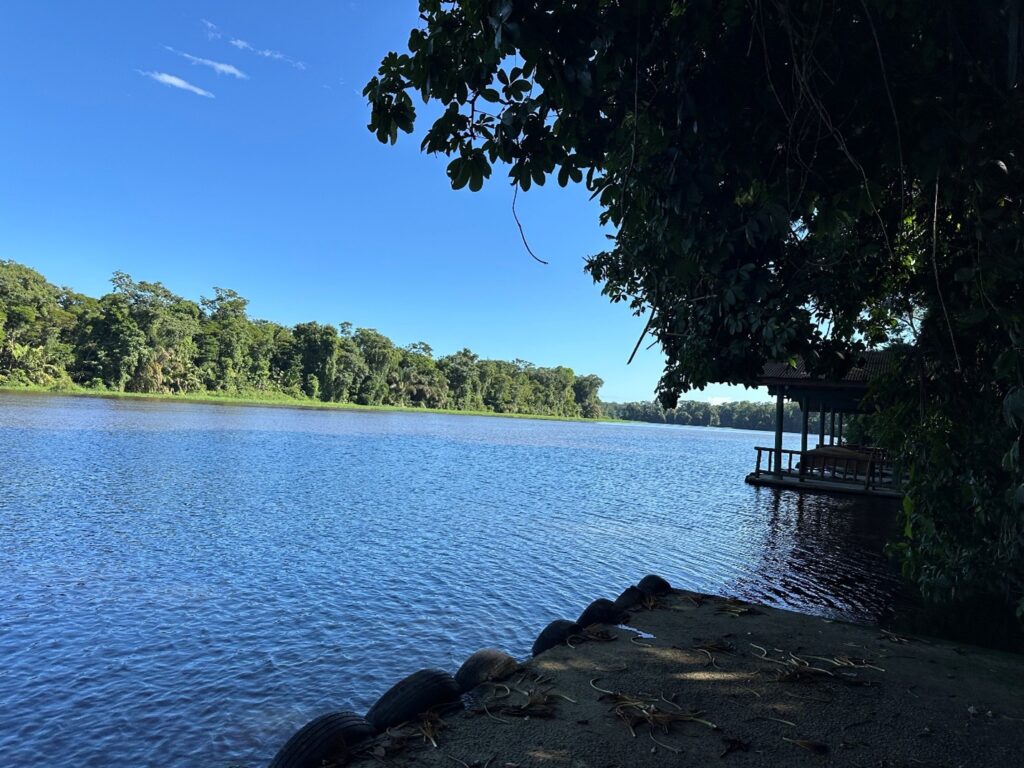
One of the most visible signs of Costa Rica’s environmental and conservation efforts can be seen in Tortuguero National Park, which is a protected area and can only be reached by boat. Tortuguero means “land of turtles” in English and with good reason. Green sea turtles have extensive nesting areas on the beaches in this area and at the right time of year you can see them there.
In the 1900’s the entire Tortuguero area was logged out and sea turtles were heavily hunted. In the 1950’s the Sea Turtle Conservancy was founded, providing a protected area for the sea turtles to nest. In 1975 Tortuguero National Park was established to further protect the area and the surrounding 77,000 acres of rainforest. The park is composed of several canals some natural and some manmade. No hunting is allowed in the country.
The drive from San Jose to Embarcadero Cano Blanco is 3-4 hours depending on route. The roads are narrow and mostly in decent shape, but some are not and the going is veeerrrrry slow. Which allowed plenty of time for checking out the banana plantations on the way!
A little banana trivia: Did you know that bananas are actually a giant herb related to celery and cilantro? Costa Rica has 22 species of bananas; the Great Cavendish is the most popular for commercial purposes. The move away from heavy pesticides by countries in the 1970’s decimated the banana industry and it took awhile to come back in a more organic form. It takes nine months for the banana to grow, and each “tree” produces for about twenty years. The bananas are packed in containers for shipment when they are green and need to be exposed to light for about twenty days to ripen.
Bananas are a big business in Costa Rica and one of their top agricultural export. It was fascinating to drive right through the middle of the banana plantations and watch the workers harvesting. I’m glad I don’t have to carry 60-80 pound clusters of bananas all day!
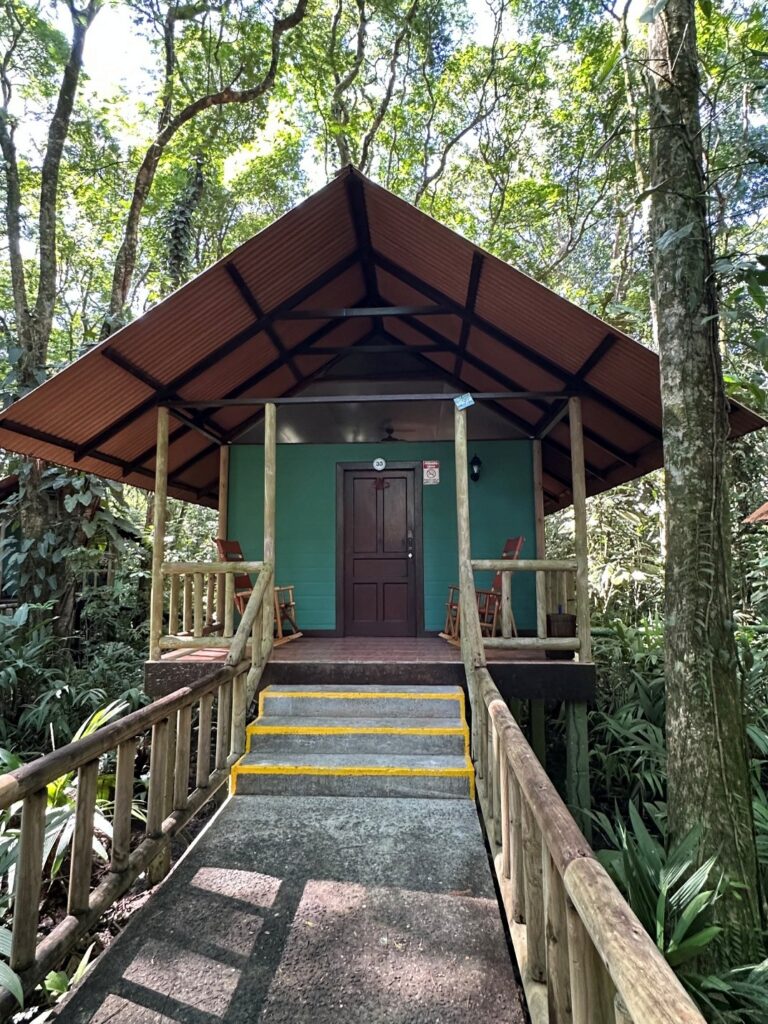
So on to the National Park and our eco-cabin at the Evergreen Lodge. The Tortuguero river is the primary river through the area, but the Rio Suerte also goes through the area, both eventually emptying into the Caribbean. After an hour – hour and a half boat ride, we have arrived! The Lodge is in the National Park and is only accessible via the water and is of course located in the rainforest.
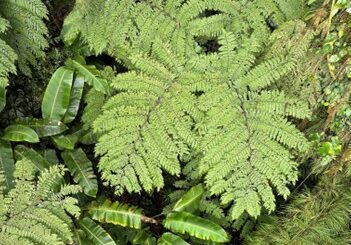
When we visited the Amazon in northern Peru, we were disappointed in the experience as most of the rainforest was clear cut and there was little to see. In Costa Rica, about 35% of the country is preserved and the rainforest in the Tortuguero area is phenomenal, with teaming wildlife!
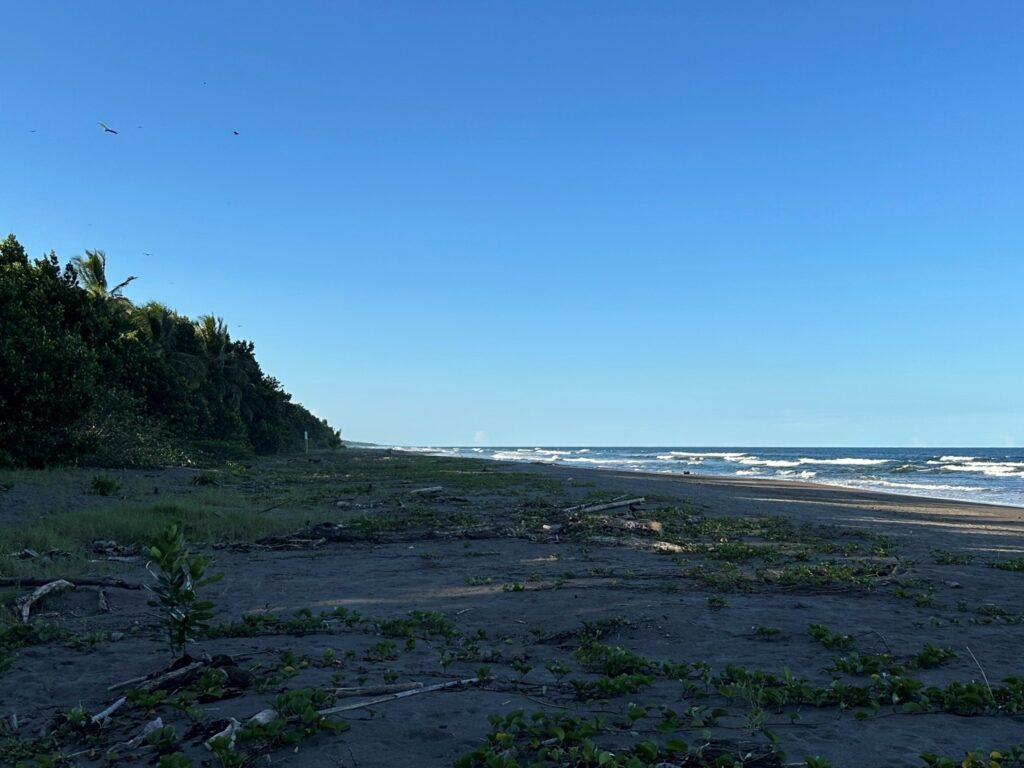
We started with a walking tour of the rainforest from the Lodge and were able to view a variety of lizards, plants and snakes. We ended up at the Sea Turtle Conservancy. There wasn’t any nesting going on as it was December but was still a great stop and a beautiful view of the coast.
A word about the food….our guide told us that they have a saying in Costa Rica: ” What is for lunch today? Beans and rice. What is for lunch tomorrow? Rice and beans!” and it is very true. We had rice, beans and stewed chicken or another type of meat most every day. Totally organic and tasty, but the selection was a bit dull. Of course, at many of the smaller lodges, the fare is simpler and the menu is set. Just a bit monotonous, so be prepared.
The eco-Lodge was a series of cute cabins. There was no heat/AC, but there was a ceiling fan and electricity. The windows were covered with screens and drapes, but since the weather is so temperate, no glass windows. It was comfortable, but not swish. It was kind of cool staying in a cabin in the National Park, not a five star, but a great experience nonetheless, which we would gladly do again, even with the unpredictable rain that is uniquely part of the rainforest.
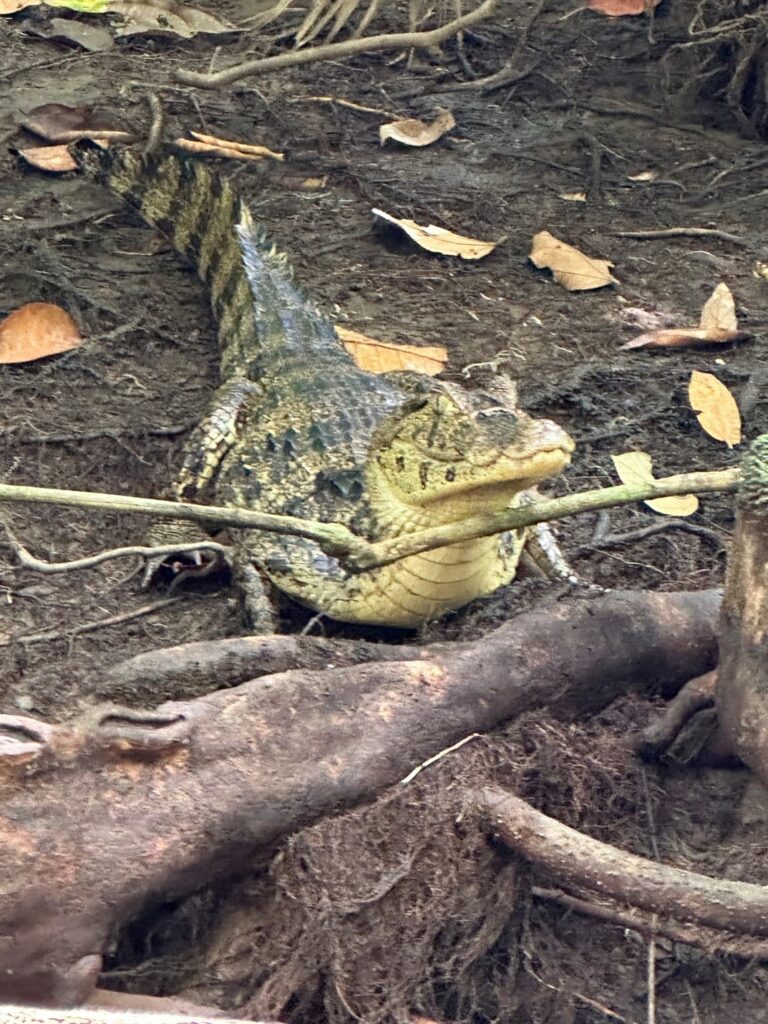
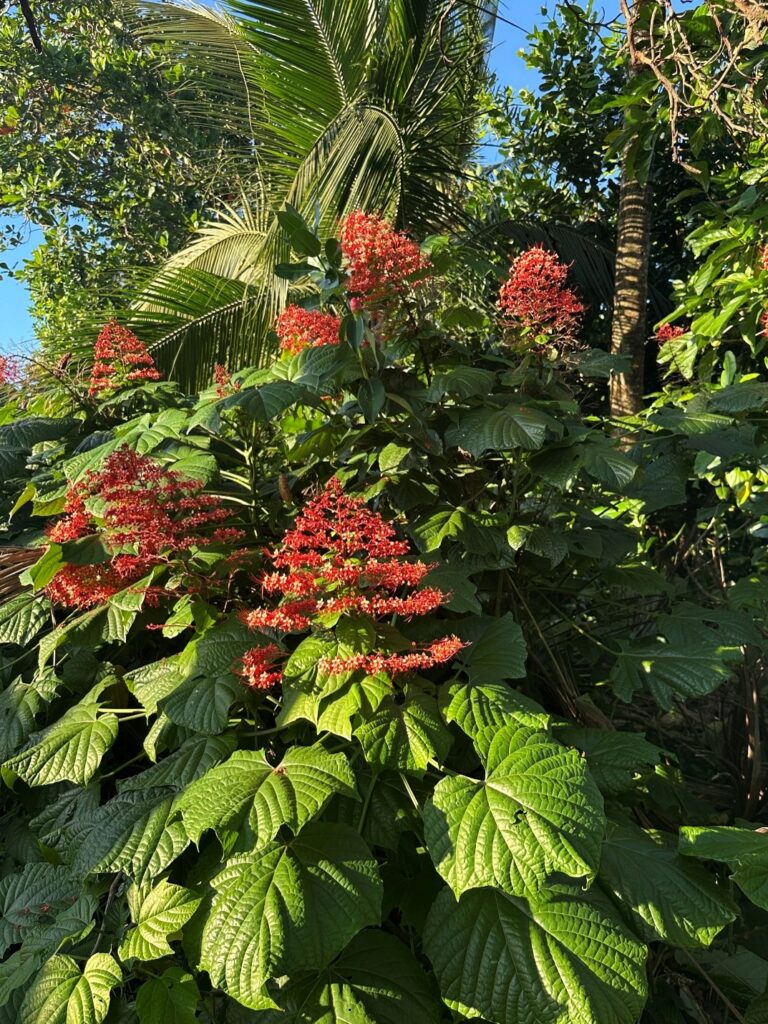
Next day was an open top boat water safari, which was very enjoyable. We made our way slowly down the many canals and saw a myriad of bird life, lots of lizards and caimans. It was fun to try spotting the next animal and everyone jumped in with a find. We did see a few sloths, but they are not easy to spot. They mostly look like round lumps at the top of a tree. They are not very active creatures due to their very slow metabolism and, like the koala, spend most of their time sleeping. What we may have missed in wildlife though, we certainly made up for in the tropical flora of the area, which was in a riot of bloom.
We were fortunate with the weather and a little rain in the night lulled us to sleep after a nice buffet dinner at the main Lodge. We also elected to spend an afternoon by the pool instead of kayaking on the river. It was a nice way to calm down, reset and truly enjoy your destination, not to mention the umbrella drinks!
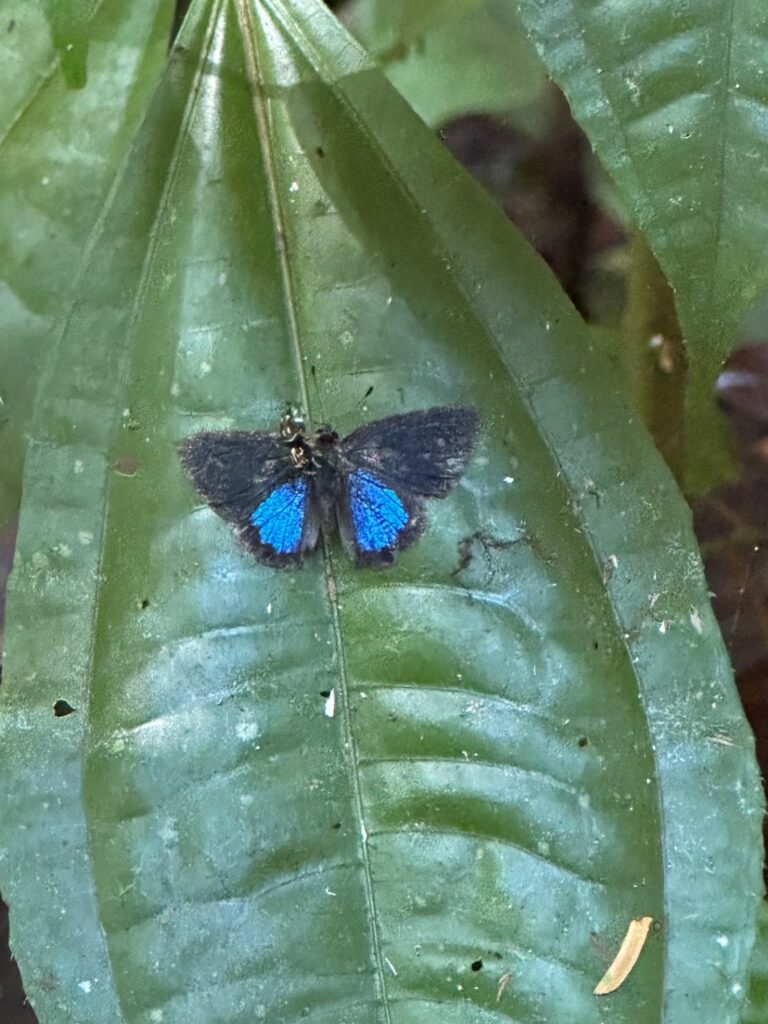
Finally, remember to keep an eye out for the Blue Morpho butterfly. It’s beautiful blue and is iconic to the area. We were a little disappointed we hadn’t yet seen any macaws, but that was to come, strangely enough at tour of a pineapple plantation the next day!
Where we stayed:. Evergreen Lodge. Individual huts, cute and rustic. No AC or heat. 2 pools. Pathways at the resort were wooden plank and some concrete. Only accessible by boat. Have accessible rooms and most walkways are accessible.
How we got there: Bus from San Jose and then water taxi to hotel 5-6 hours. This was part of a 9-day small group tour through Costa Rica.
General Accessibility Information: Hotels in larger cities can be fully accessible, with others further out partially accessible. Some tourist attractions are accessible including Manuel Antonio National Park (paved paths, beach wheelchairs), and Mistico Hanging Bridges. Specialty tour companies include Wheel the World and Il Viaggio Travel. However, outside of a few parks, accessibility is limited due to uneven surfaces and lack of infrastructure. Call in advance to verify and make specialty arrangements. See our sections on specialty apps and accessible travel for more on accessibility assistance.