Belfast
Northern Ireland has always been a bit of a mystery for us. Years ago, when we visited Ireland, we avoided Northern Ireland due to “the Troubles”. There was a lot of unrest including kidnapping, people being “disappeared” and bombings (1970’s – early 90’s). In fact, the Europa Hotel in Belfast is still infamously remembered as the most bombed building in the world.
Even in the southern part of Ireland in a small town, I distinctly remember a woman at a pub singalong looking at me with hatred in her eyes because I was English (though we went out of our way to let everyone know we were AMERICAN English.) Emotion aside, it also seemed that Ireland hadn’t really emerged from the 50’s (I also remember being told by friends to LOSE at pool as to not beat the local male pool prodigy – you could hear a pin drop in the pub until I missed a shot!)
Thankfully, I am happy to report that Northern Ireland and indeed the Republic of Ireland have moved away from the anger of the “Troubles” and old cliches.
You can’t talk about Belfast without a mention of “The Troubles”. Interestingly, our guide said that the conflict was less about religion than it was about discriminatory treatment and political preference…a civil rights issue. The struggle was between Unionists/Loyalists who were mostly Protestant, who wished to remain part of the UK and Nationalist/Republicans who were mostly Catholic and wished for a united Ireland. The Catholics felt they were on the receiving end of discriminatory treatment from the then Protestant (and English) government.
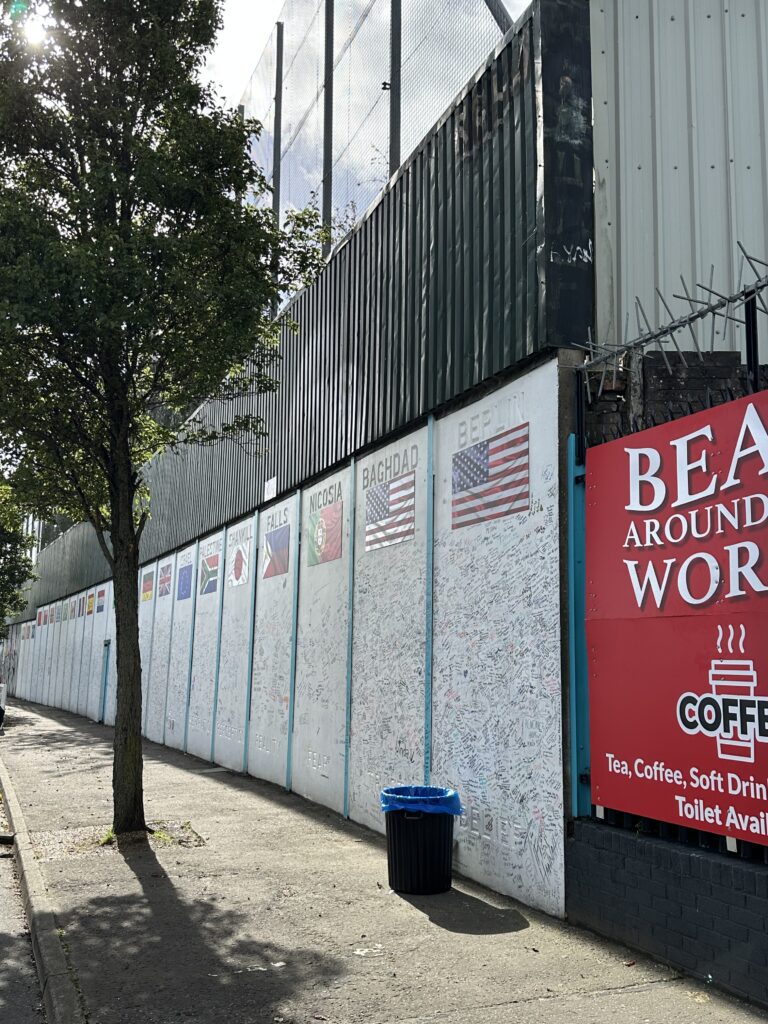
An interesting historical subject, though most of the issues have been favorably resolved since the Good Friday or Belfast Agreement in 1998, there is still some discomfort in particular areas of the city and some of the “peace walls” still close at night. Additionally, the educational system is still biased as to which part of the city you attend school.
The Ulster Museum has plenty of information about this turbulent time or (like us) you can take a walking tour to see key sights like the political murals on the Falls and Shankill Roads and the Peace Walls. Do retain a guide to get the big picture, it’s an important and recent part of the history of Northern Ireland.
Having never visited Northern Ireland, I was looking forward to our first stop in Belfast. We took the ferry across from Cairnryan, Scotland, which was about a two-hour drive southwest of Glasgow. The crossing took about 2.5 hours and at least on our travel day, was smooth sailing, though not much to see until we got closer to port.
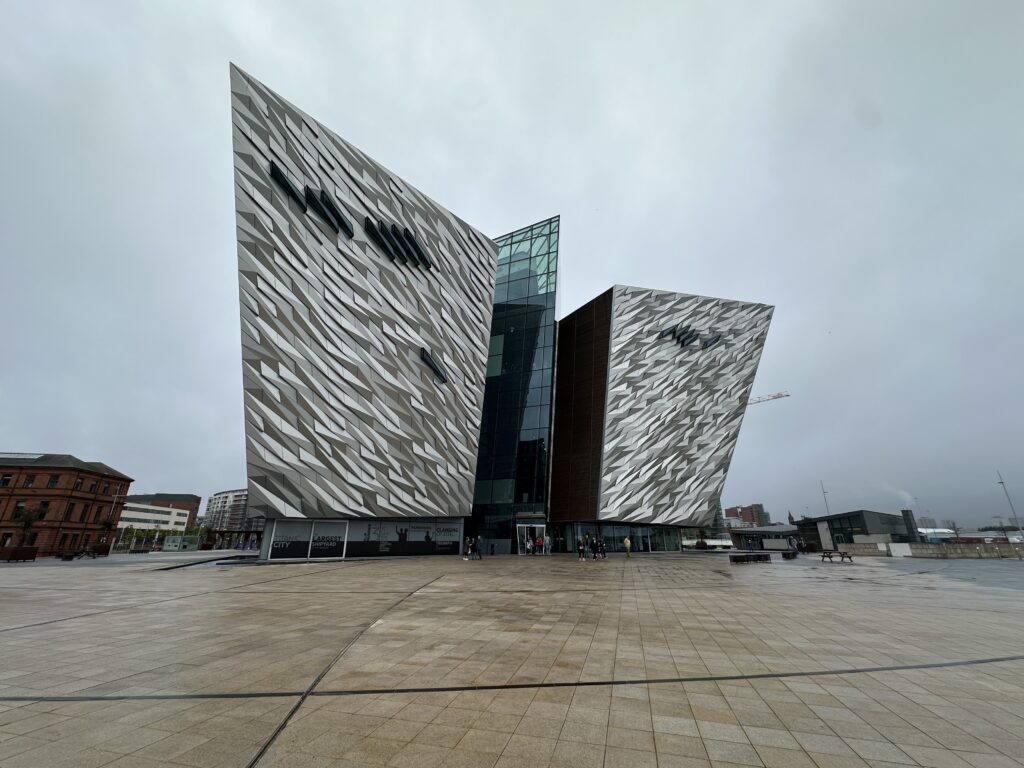
The highlight of any visit to Belfast should be the spectacular Titanic Belfast. The architectural beauty of the museum exterior gives you a clue as to the high tech in store for you inside and it does not disappoint. Plan to spend at least an hour and a half. Note: this is not like the “Titanic Exhibit” that you may see in the US, this is a much more thorough accounting of the times, the shipyard, the vessel and the event.
Tip: As the beginning of the museum is usually crowded with those getting their bearings, bypass some of the beginning history of Belfast and shipbuilding and go straight to the “Shipyard” ride which takes you through a replica shipyard, as the line may be a bit long. You can catch up on the history later after hitting the highlights.
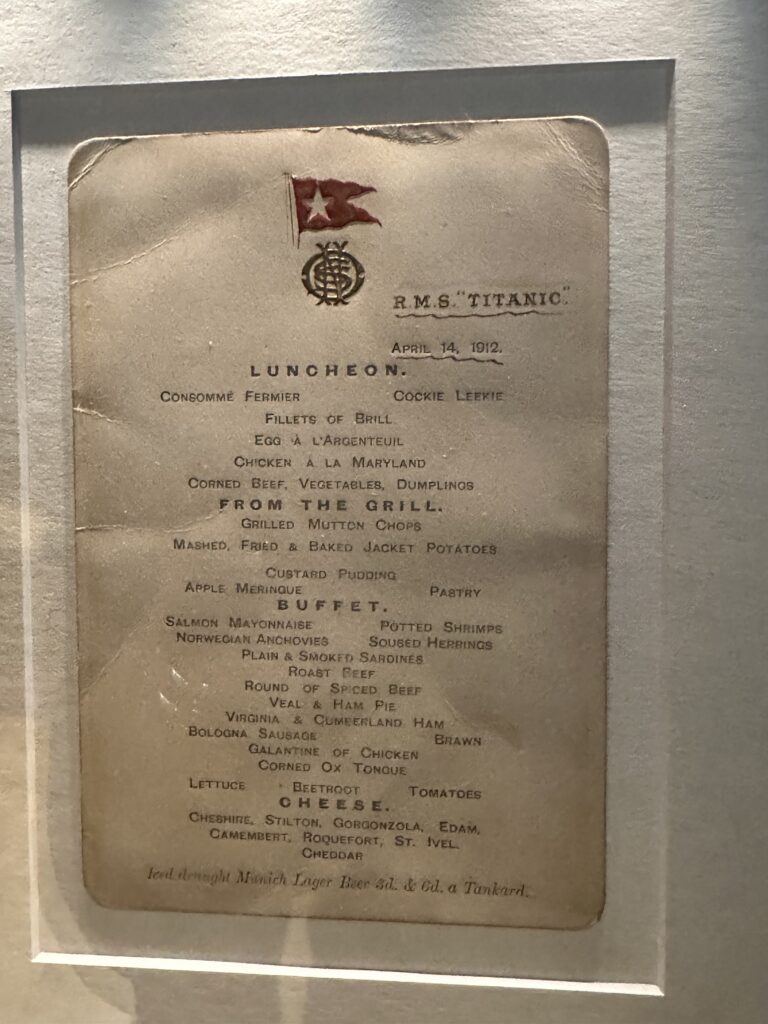
And the highlights: Replicas of the life-size ship cabins, items salvaged from the Titanic, footage of the shipwreck and if you have time, the actual Titanic slip yard is next door as well as the SS Nomadic, the last remaining White Star Line ship. The museum is fully accessible. Belfast at one time was a major port with strong shipbuilding. It is interesting to imagine what it must’ve been like in the port area in the early 1900’s.
Our second day in Belfast, we took some time out to visit St George’s Market, a covered market that has a little of everything. If you go around lunchtime on Sunday, you may be able to hear some live music while savoring a meat pie or a lovely Millionaire Bar…caramel, chocolate, chocolate crispy base…I’ll have two, please! And of course, don’t forget your pint of Guinness!
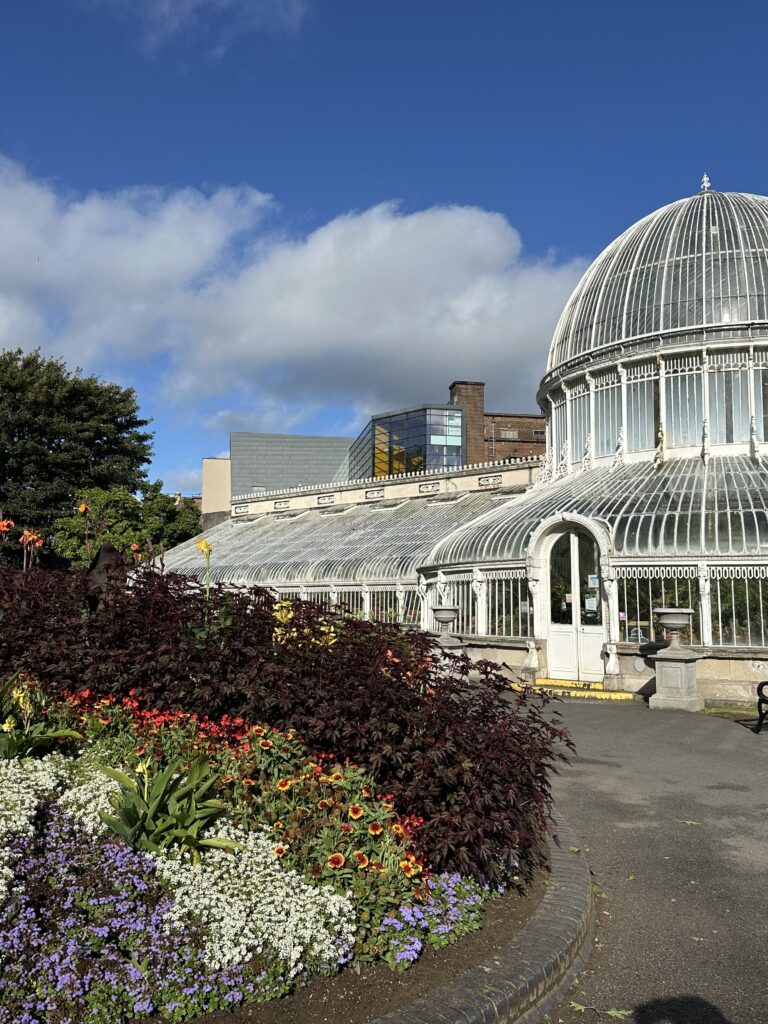
Queen’s University Belfast founded in 1845 and the adjoining Botanic Gardens are worth a stroll as well as a walking tour around the city center. The City Hall, built in 1888 is modeled after St Paul’s Church in London. And if you don’t mind a short drive, the natural wonder of Giant’s Causeway awaits an hour and a half away.
We would’ve liked to have spent a bit more time learning about “The Troubles” as it defined thirty years’ time and not so long ago, but we were off to our next destination….Galway!
Where we stayed: room 2 Belfast hometel, breakfast included. Accessible entrances, main areas and elevator. Some accessible rooms.
How we got there: Two-and-a-half-hour ride from Glasgow to Cairnryan port, then ferry ride across to Belfast for 2.5 hours. Fifteen-day small group tour through Scotland and Ireland.
General Accessibility Information: Most of the tourist areas were accessible, though some of the older areas of town were not accessible due to cobbled streets, street curbs and high thresholds of historical buildings. Call in advance to verify and make specialty arrangements. See our sections on specialty apps and accessible travel for more on accessibility assistance. Many newer hotels and transportation are accessible.