An Irish Farm
Travel Advice for Seniors: An Irish Farm
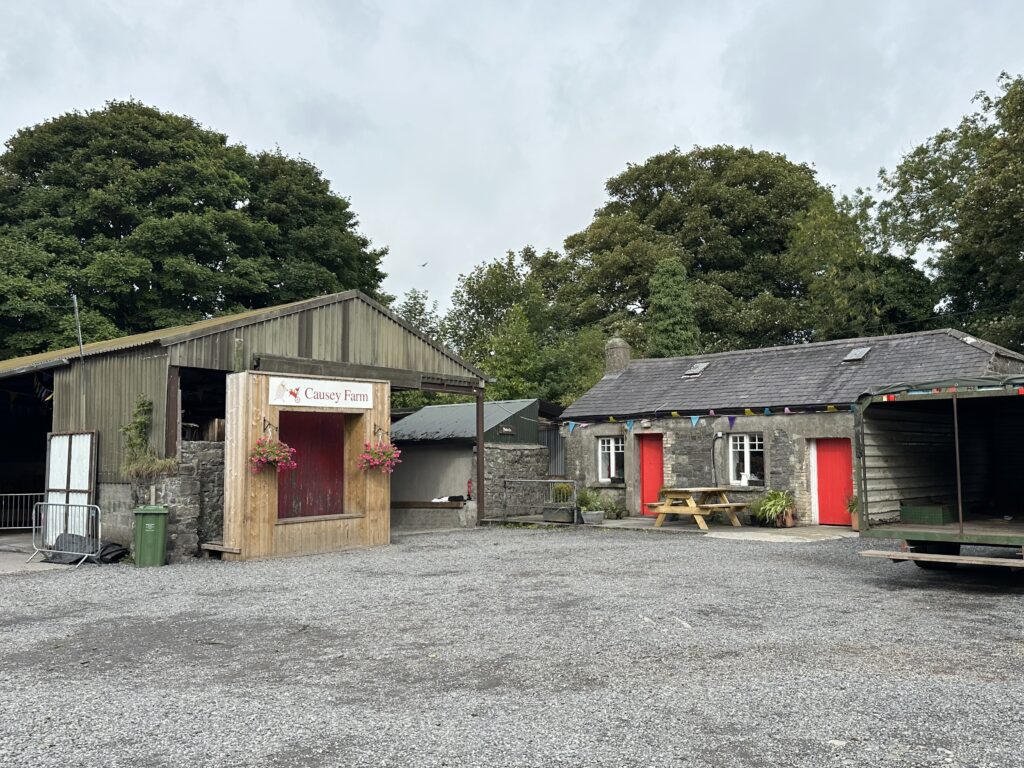
Setting out on our way to the Republic of Ireland and Galway, we traveled a good bit of Irish countryside. Rolling green hills, pastoral settings and plenty of sheep! We stopped by a local farm for a sample of farm life and lesson in Irish culture.
A quick history of the area: From the sixteenth century, many of Irish farms or plantations were settled by colonists from Scotland and England, mainly Protestants, which created political and religious divisions. The Battle of the Boyne pitted William of Orange (Protestant) against the French King James II (Catholic) and the Jacobites. William of Orange won and turned the tide of religion toward Protestant. Bonnie Prince Charlie, grandson of King James II years later tried again to defeat the Stuart claim to the throne (Jacobites) at the bloody battle of Culloden in Scotland.
More currently, the 1916 Easter Rising and subsequent War of Independence led to the 1921 Anglo-Irish Treaty, whereby Northern Ireland remained part of the UK and the south or Republic of Ireland acquired independence.
Still, while many in Ireland remained Catholic, friction was amplified by the English (Protestant) landlords and in the early 1900’s the potato famine wiped out many farms, causing a great out migration to North American and England. Like the Scottish Highlands, there are many abandoned castles in Ireland due to numerous conflicts, intense poverty and general economic decline.
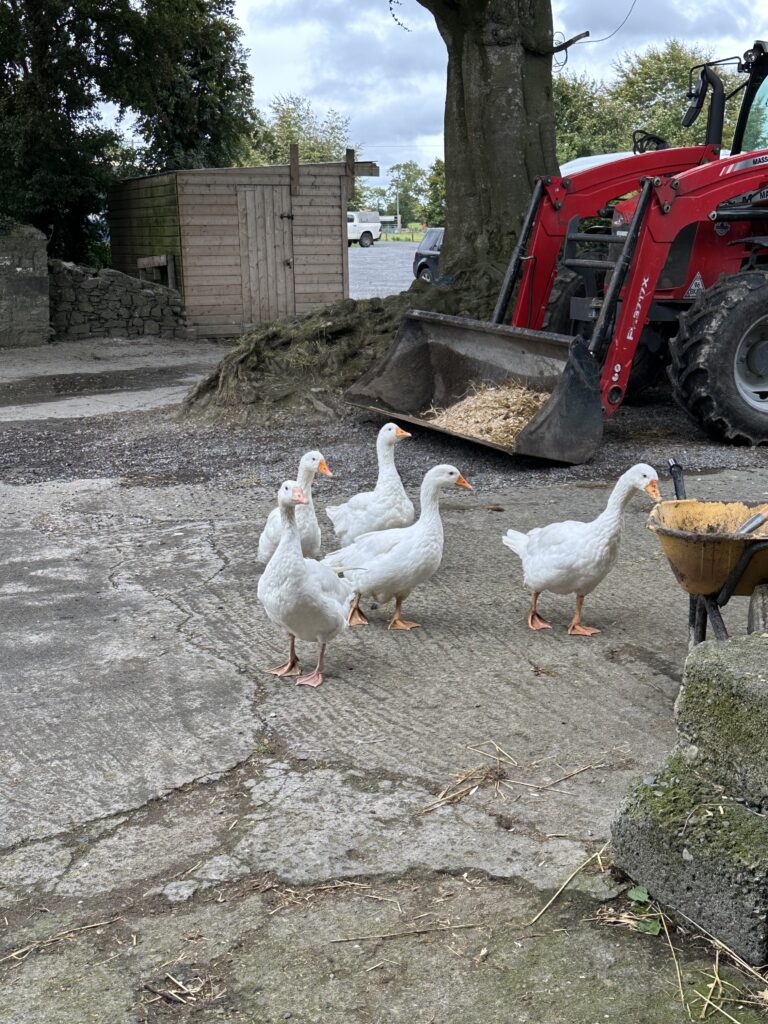
Thankfully, our stop at Causey Farm was politics and religion-free and we were treated to bit of Irish culture! It was fascinating to submerse ourselves in Irish daily life on the farm for a few hours.
Causey is a working farm that has expanded features and activities for tourists wanting a little more education on Irish life. We started with a lesson in Irish step-dancing. Anyone for a little River dancing? It wasn’t near as complex as that, but it was fun, even if you “don’t do that sort of thing”. It is not an unusual event for step-dancing to break out in any Irish pub in the evening along with rollicking music and Guinness flowing. It’s part of “craic”, Irish for a great time! And having been to many an Irish pub, I have to say it is a great deal of fun, even though my stepping leaves a lot to be desired!
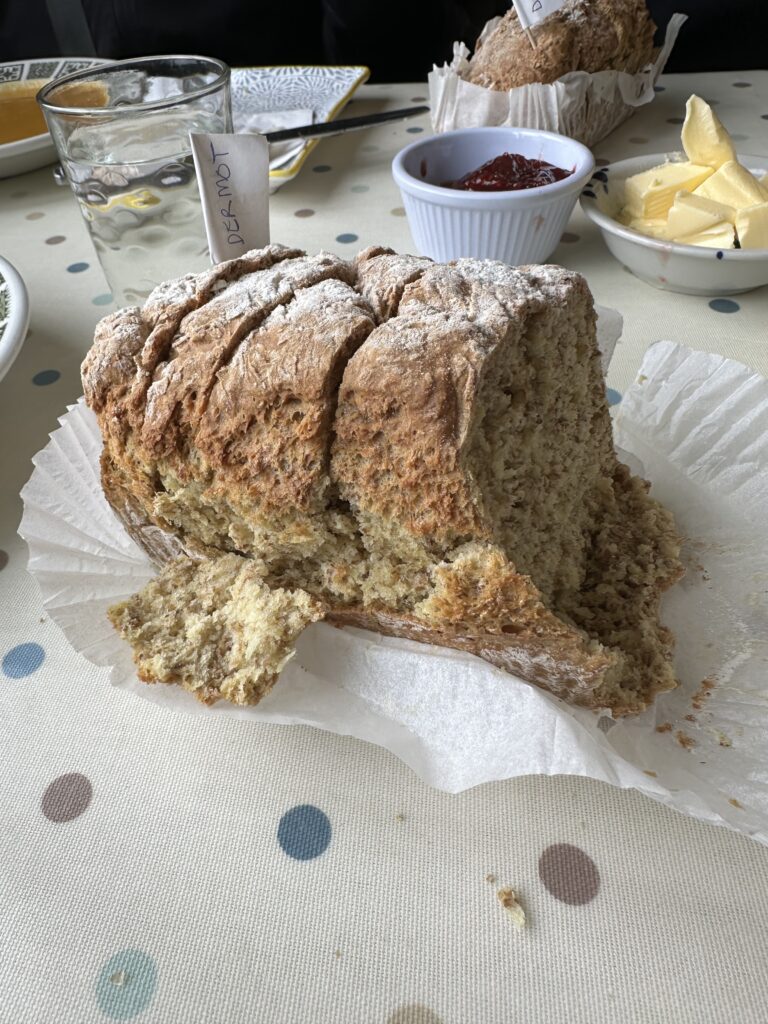
Next activity was baking Irish brown soda bread. I always like cooking demonstrations, but don’t usually sign up for them, so this was a nice aside. It was also a lot of fun seeing the different people in our small group tour putting together a nice loaf or failing miserably! The good news is that we later got to eat our loaf of bread with some stew, and take the rest home. Our loaf was a success!
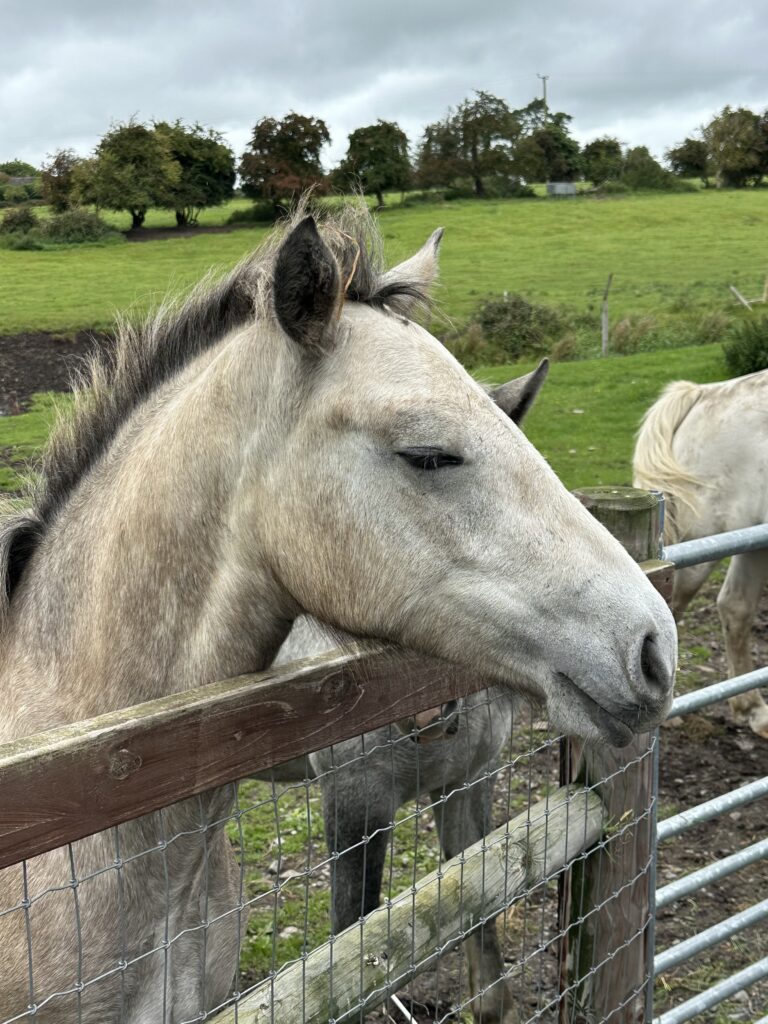
Following lunch was a thorough tramping around the farm checking out the livestock. There were some novelty cattle, geese and deer, but mostly sheep of several sorts. They did have a group of Connemara ponies, which are native to Ireland. Some say the ponies descended from Viking and Celtic times, others say they are Spanish. No matter their origin, they are beautiful and are suited to the western Ireland’s challenging environment.
The most interesting part of the livestock viewing was the sheep dog demonstration. Anyone remember “Babe” the sheep-herding pig? It was fascinating to watch the dogs work on a simple command from the owner of the farm. If he commanded the dog to watch the sheep, it appeared that they would do it for hours on end. Even when the demonstration was completed and we asked to pet the dogs (yes, I miss my dogs when traveling!), they still had their eyes on the sheep and their master, waiting for the next command.
Normally, we don’t go in for experiences like this, but we did really enjoy the visit. When you are “power touring” through all of the famous sights and museums, sometimes you forget to stop and really look at the culture and the lives of the people. This stop provided that important link. So….next time you think “oh, I wouldn’t like”, instead think “I wonder if I would like”. We think you will!
How we got there: Two hour bus ride from Belfast. Fifteen-day small group tour through Scotland and Ireland.
General Accessibility Information: The farm is accessible with an accessible restroom and parking. Some of the walkways can be a little uneven and hilly, so use caution. Call in advance to verify and make specialty arrangements. See our sections on specialty apps and accessible travel for more on accessibility assistance.