Bucharest
Travel Advice for Seniors: Bucharest
After the many small towns we visited in Croatia, Serbia and Bulgaria, it was nice to get back to the big city and Bucharest filled the bill perfectly. Our cruise ended in Bucharest, but we still had a full day of sightseeing ahead of us.
Bucharest is the capital of Romania and home to over 1.7 million people. Known as “Little Paris” it mixes French architecture from the 19th and early 20th centuries with Communist era architecture such as that in the gargantuan House of Parliament.
Romania, like many of the Balkans, has had a similar past. The Romans settled here as did the Ottoman Empire. The country achieved independence from the Ottomans in 1881. World War I saw an alliance with the Allied powers and World War II an alliance with the Axis powers, leading to a communist state that persevered until 1989. Romania joined NATO in 2004 and the European Union in 2007.
You can’t really talk about Romania without at least a mention of Count Dracula, also known as Vlad the Impaler. He was a 15th century ruler known for his brutal methods of punishment which earned him his title. He lived in the Wallachia region in Bran Castle and you can get a tour to visit….if you’re brave enough!
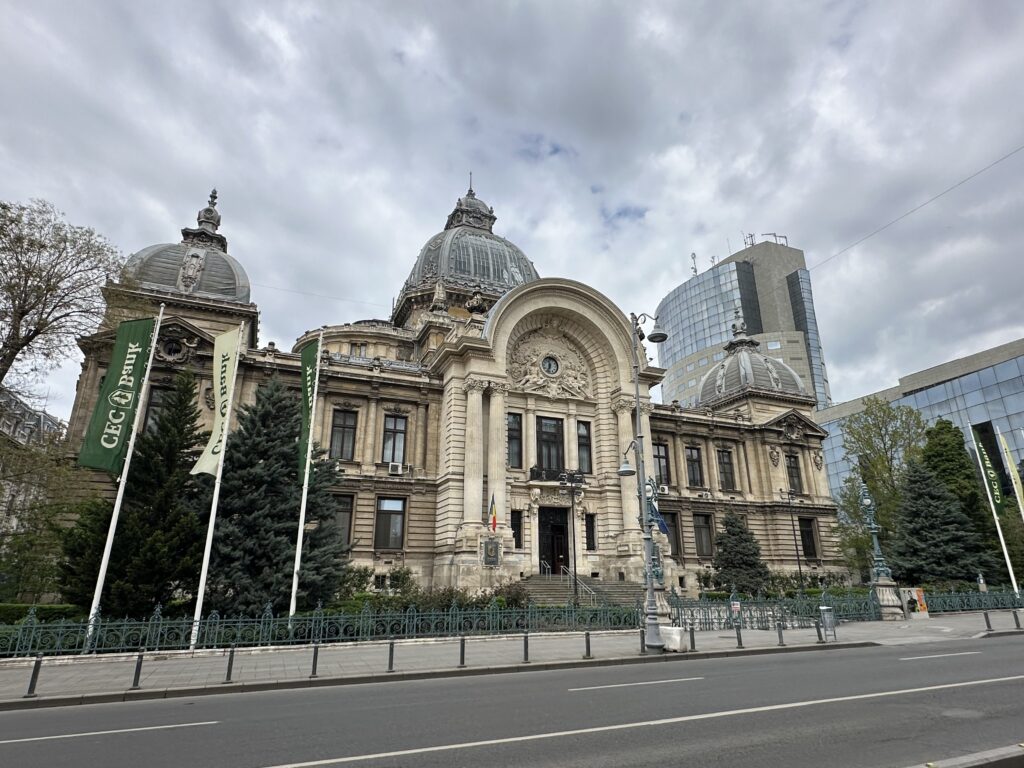
We first hit the historical area of Bucharest, including the Romanian Atheneum, and Arch of Triumph. You can easily see why the city has earned its nickname of “Little Paris”, just by walking around the city center and the museum areas. Beautiful!
While visiting this area, we were privileged to hear stories from a gentleman who had been a part of the liberation of Bucharest and indeed, of Romania from the communist government. He was only 15 years old at the time and took his place atop a tank to help and witness the overthrow of the government. He had the original flag with his own blood on it for provenance. It was an honor to hear him speak about what the independence of his country meant.
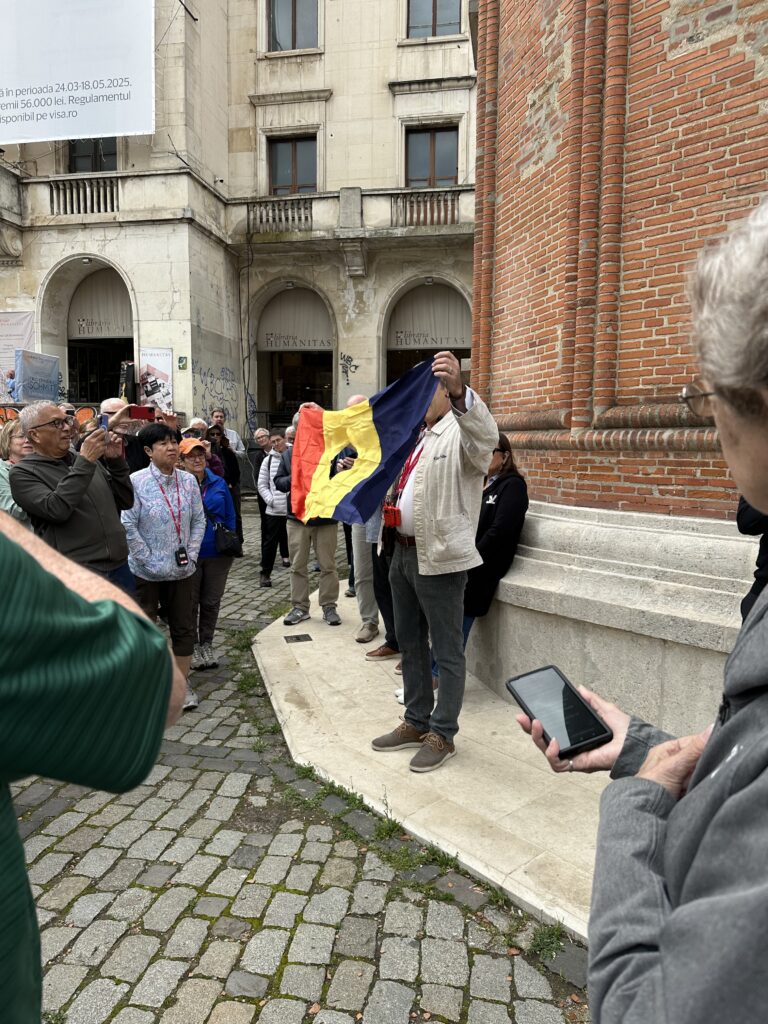
This is something that as Americans, we can’t really understand the immensity of in the present peaceful era. This part of the world has been through many struggles to free themselves from oppressors and many are still feeling the economic impacts.
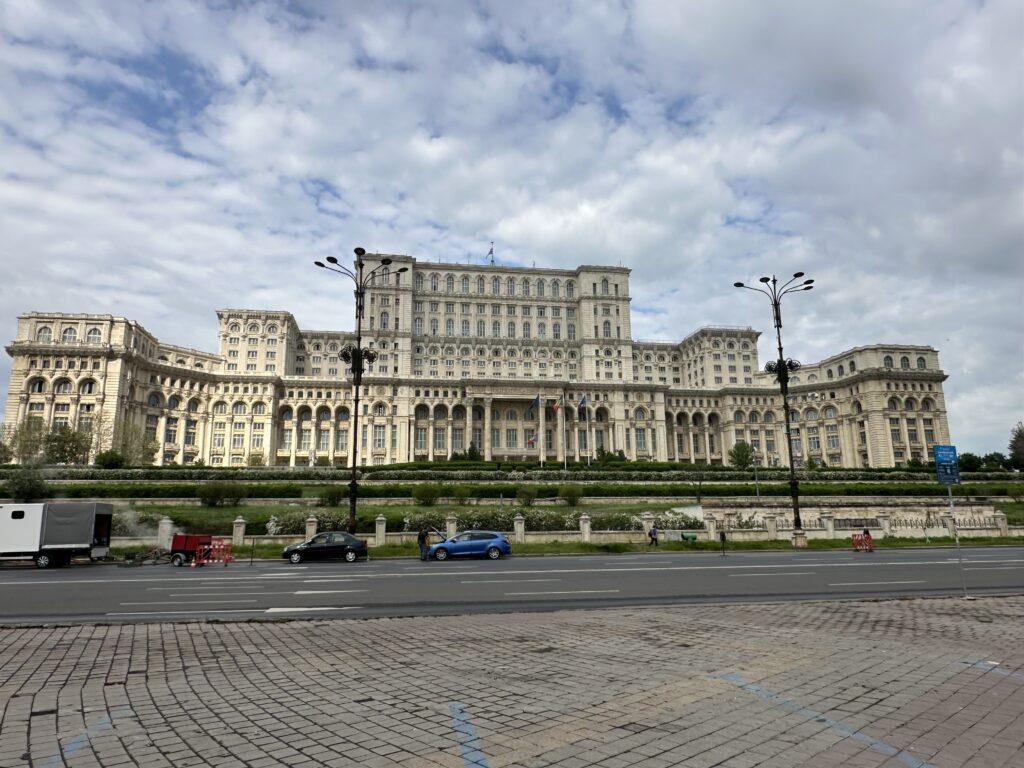
Next up was a drive to see the immense Palatul Parlamentului government building, which has 1100 rooms. The Palace of Parliament is the world’s second-largest administrative building (after the Pentagon) and former dictator Nicolae Ceauşescu’s most infamous creation. It was infamous because tens of thousands of people were displaced, and their homes razed for the ground needed and the overwhelming cost of construction and continued maintenance (said to cost $6M Euros yearly).
Construction started in 1984 and remains unfinished. Interestingly, only part of it is used for Parliament and some of the rest is leased for general office space. Rumor has it that it is not only haunted but also has a nuclear bomb shelter underneath it as well as a network of escape tunnels. We didn’t tour it, but it may have been fun to do so!
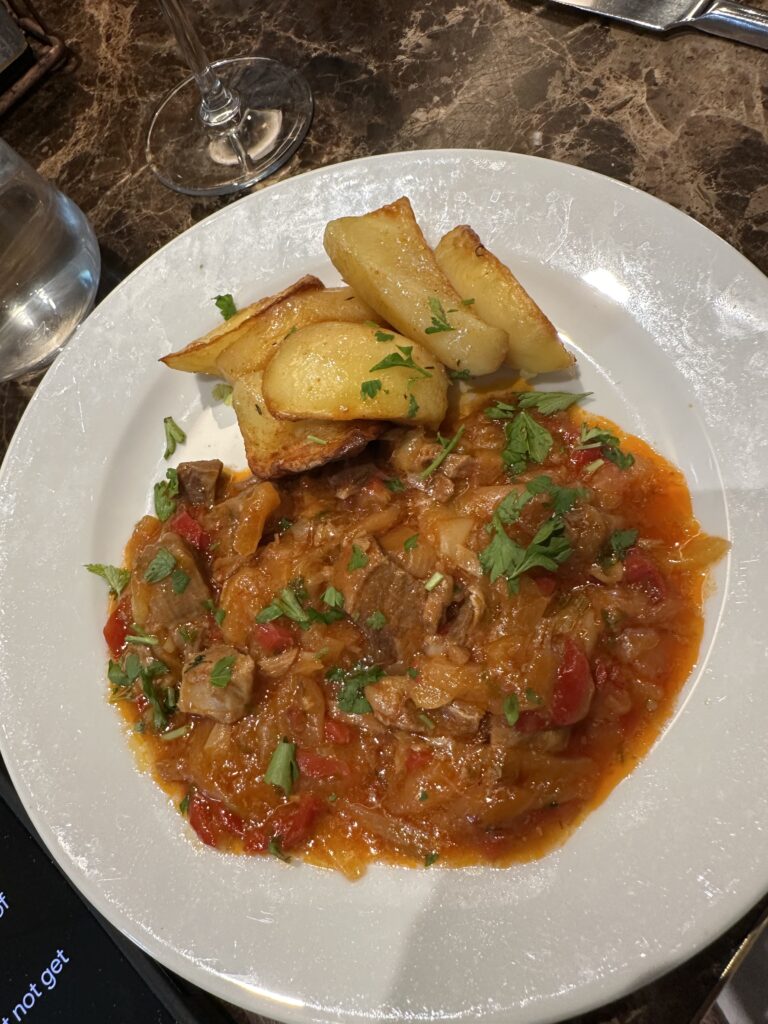
Lunch time arrived and we were treated to a wonderful Balkan lunch with some traditional dancing at Hanu Lui Manuc Restaurant. Lunch was a lovely beef stew with French fries. The dancing was exuberant and lively.
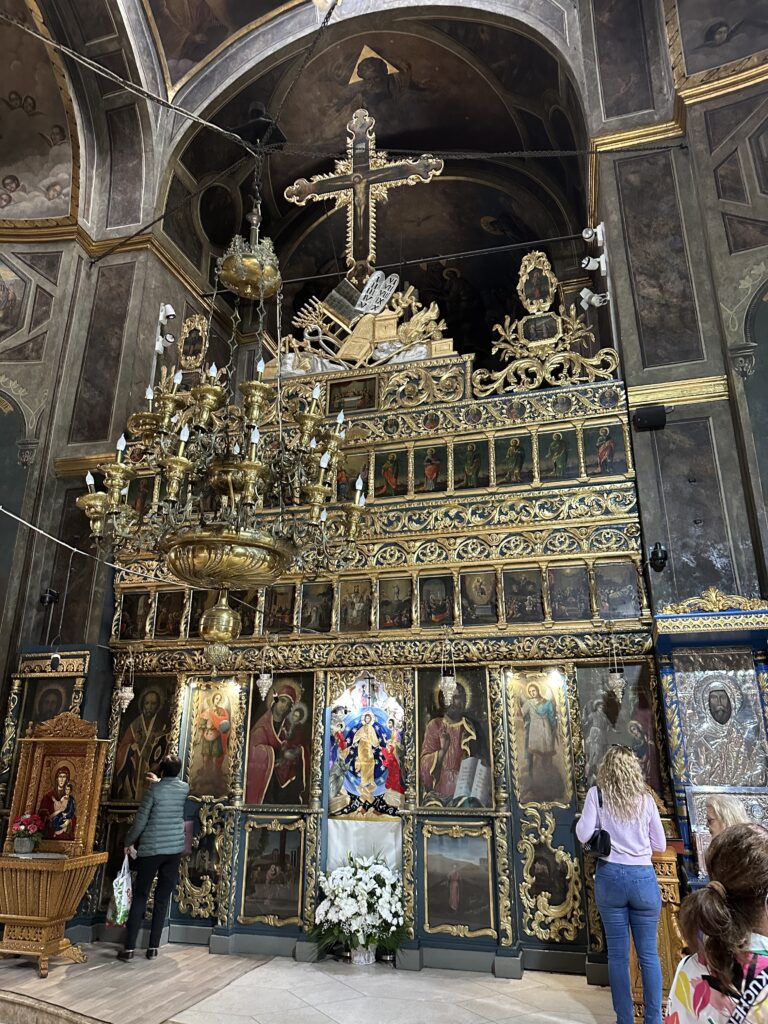
After lunch we toured the nearby church, SF Anton – Curtea Veche, or St. Anthony’s Church, which had been beautifully remodeled and was still undergoing some rebuilding. Originally built in 1559, it is the oldest church in Bucharest.
We then walked off our lunch by heading to a centrally located square/parkway which had multiple pools of dancing fountains, apparently for the motorists to see as many were in a roundabout and you had to cross traffic to see them. The 1.4 kilometer-long complex of 44 fountains is situated between Alba Iulia Square and Constitution Square. These fountains are known for their choreographed water, light, and music shows.
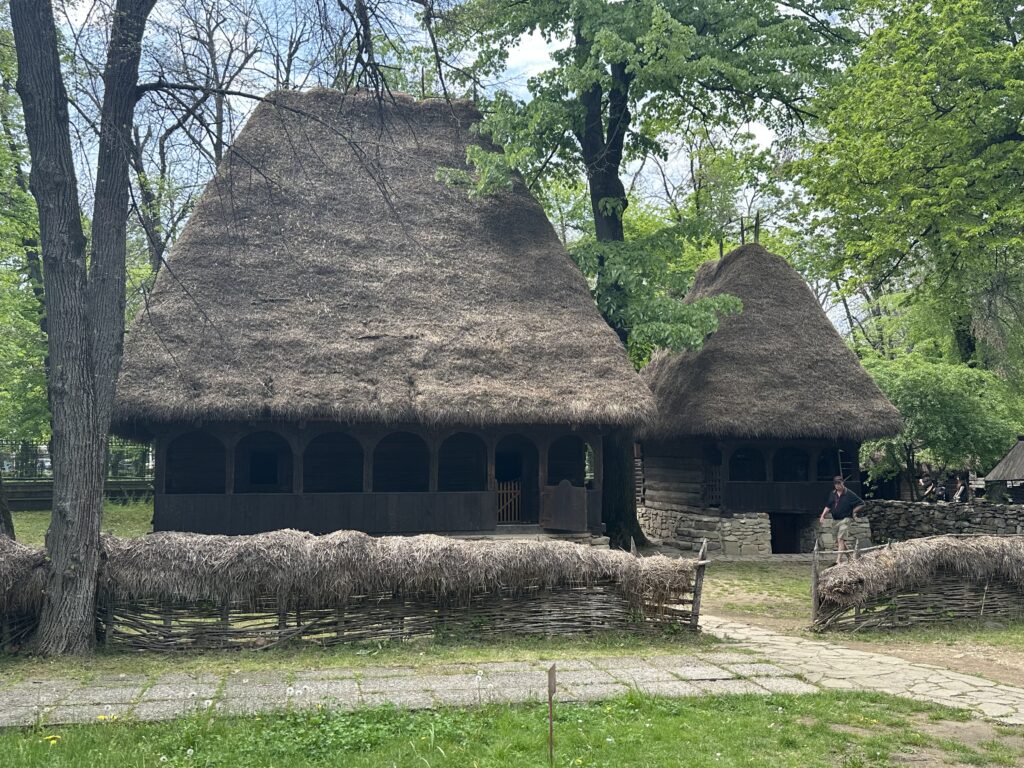
Our final stop was the Muzeul National Al Satului or Village Museum Site. This was an interesting and educational park dedicated to housing of various types through the years in this part of the world. A few houses were open, and you could see the layout inside and a small amount of furniture and accessories. The park had ancient, thatched huts that were built into the ground as well as more current houses that had been shipped in for the purpose of creating the park. It was an unusual park and a nice way to spend an afternoon.
You really need more than just one day to experience Bucharest, and we would’ve taken an extra few days had our extension to Istanbul not started the next day. Romania is a big country with a lot of fascinating history and one day does not do it justice. Guess we will need a return trip!
Where we stayed: JW Marriott Bucharest Grand Hotel. Accessible parking, route and rooms.
How we got there: Sailed from Rousse, Bulgaria. This was part of a seventeen-day river cruise tour through Eastern Europe including Austria, Hungary, Croatia, Serbia, Bulgaria, Romania and a post-extension in Turkey.
General Accessibility Information: Bulgaria’s larger cities are generally accessible with accessible major hotels and sights. Many of the historical sites will have steps or cobbled surfaces, so be prepared for partial or little accessibility. Call in advance to verify and make specialty arrangements. See our sections on specialty apps and accessible travel for more on accessibility assistance.