Golubac
Travel Advice for Seniors: Golubac
Our second stop in Serbia was the tourist stop of Golubac. This stop featured two of the best restored historical sites that were on the trip.
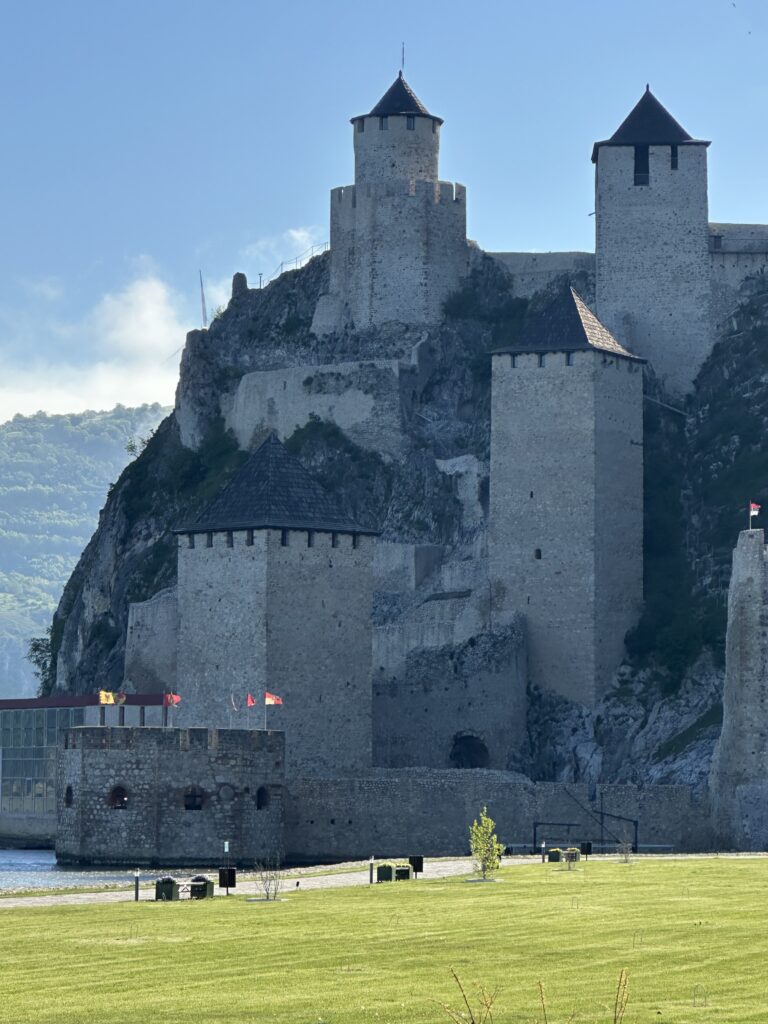
There’s no missing the Golubac Fortress on the Danube. It has stood since its inception in the fourteenth century and has been the goal of many conflicts due to its dominant location on the river. With the occupation of the Fortress comes the right to determine who passes and indeed how much the fare is to pass!
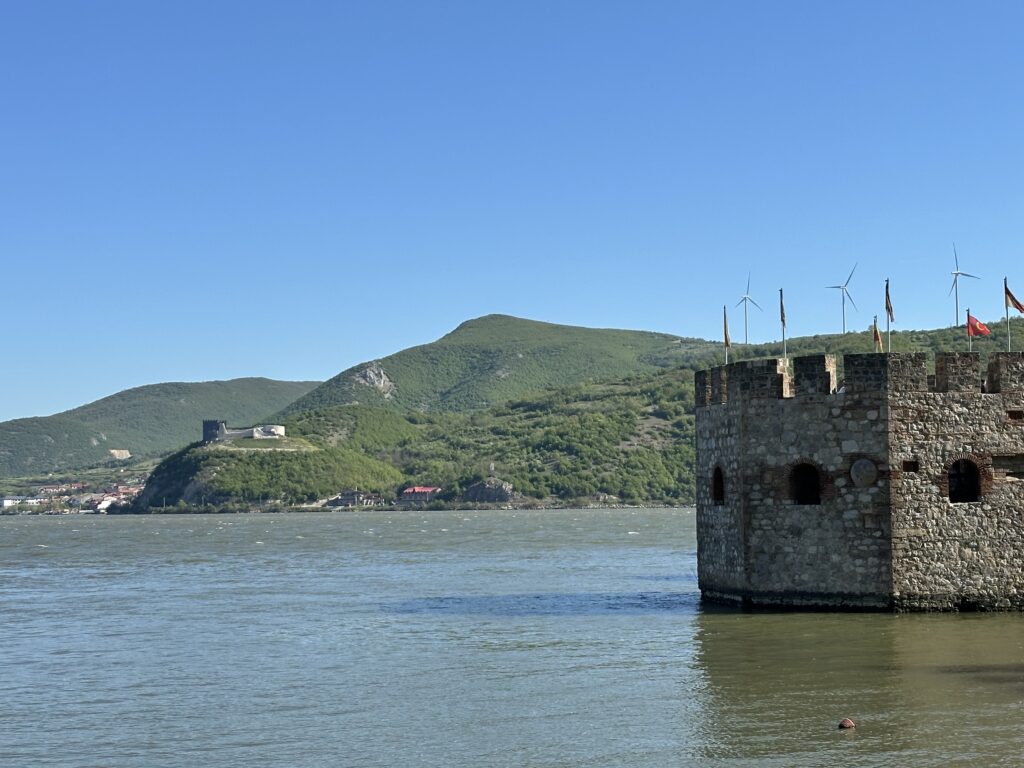
If you use your imagination, you can imagine the chain that at one time crossed the Danube, stopping boats from proceeding without paying the fare. You can also easily imagine archers raining arrows down at invaders as well as catapulting flames and iron balls to defend themselves. But the chain is long gone, and the fortress has been completely and beautifully renovated.
The inside of the fortress features restored interiors, a display “Panarama of the Centuries” and various historical items. The main attraction is a copy of Miroslav’s Gospel, written and painted by Serbian monks in the late 12th century, the oldest preserved Serbian Cyrillic manuscript.
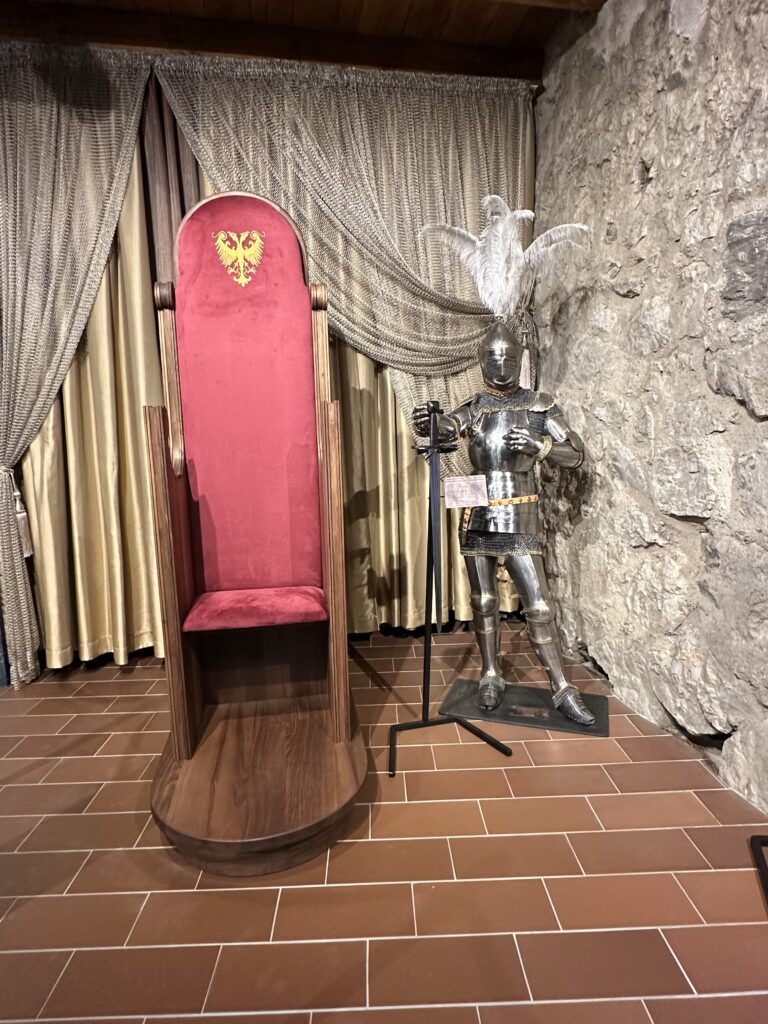
It was a beautiful site, with well-manicured lawns and pathways and nicely done displays. It appeared to have been recently remodeled, likely governmental dollars coming to help keep tourism heading in the right direction. Even easier, we sailed right up to the dock, and it was a very short walk from the boat to the site. The pathways were leveled cobbled stones and there was an elevator. The site has labeled areas that correspond to the level of accessibility.
We opted for an excursion to Lepenski Vir Archeological site later in the morning, which was an excellent choice. The ruins were discovered when teams were sent out to determine if there was anything historically important in the way of building the first river dam on the Danube. The site was discovered in the mid 1960’s and the entire site was relocated to avoid river flooding in the early 70’s. The site has been meticulously recreated under a huge, covered atrium. You can clearly see what once was a small village in the outline of the houses and community centers.
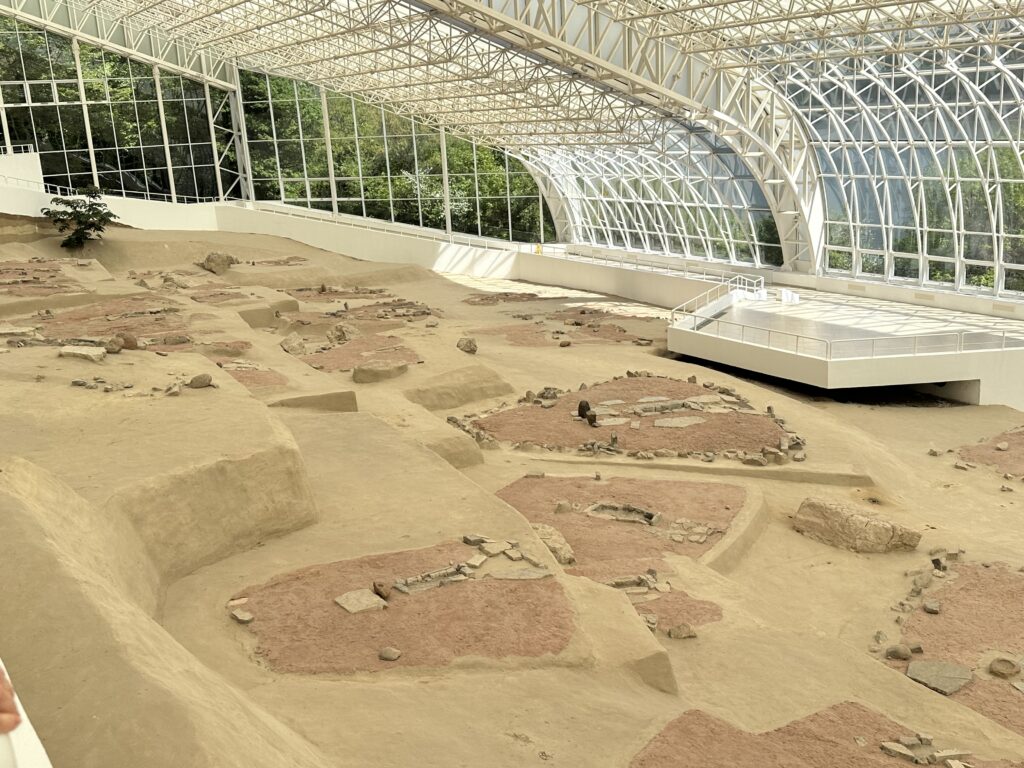
Lepenski Vir is thought to be over 12,000 years old. The site shows a marked change from hunter-gather lifestyle to more community-oriented lifestyle. Of special note are the fish/human monuments, some of the oldest monumental art in Europe. The site and parking are accessible.
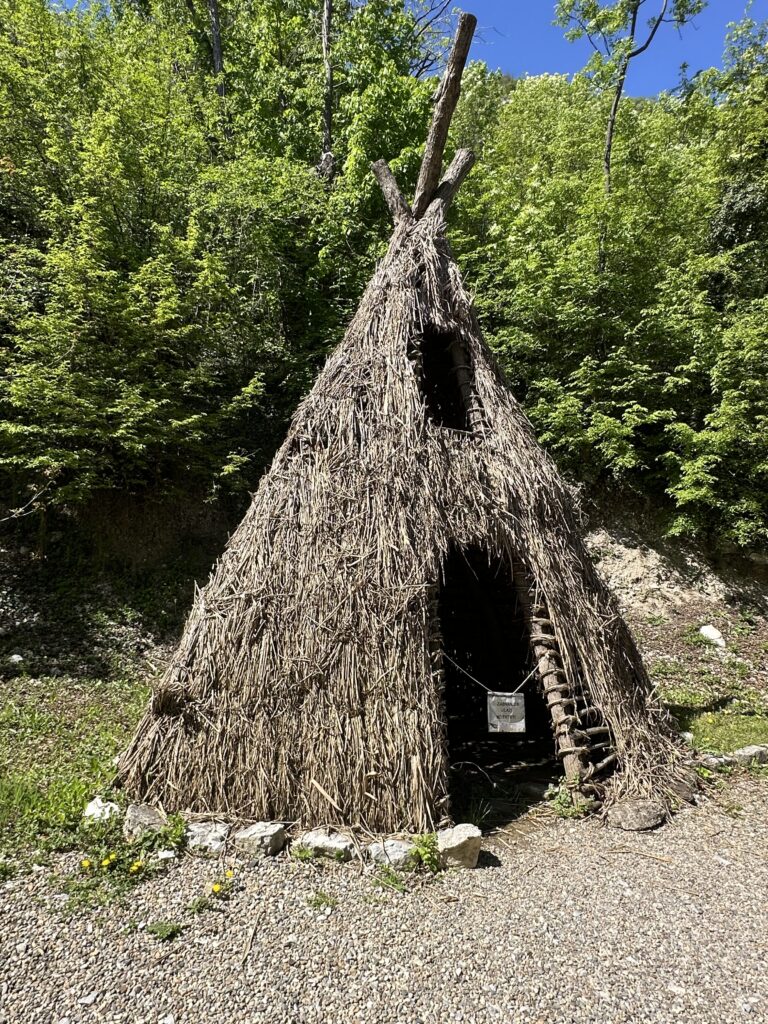
Adjacent to the Vir was a replica village from the era. Tepees made of branches and grasses showed how people may have lived at the time.
Part of the pleasure of signing up for an excursion is that the sites are often further inland and you get to take a lovely ride, usually in the countryside. We always enjoy looking at the crops, livestock and other industry in each country as we travel. In this case, we had a majestic ride along the riverbanks up in the hills. It was a sunny day and the mists were still hanging over the Danube between the mountain passes. Glorious!
We also made a stop for a snack at a lovely viewpoint on the side of a mountain with river views. After the gratuitous sample of brandy, we tried some of the local delicacies including a hardboiled egg, fresh tomato, cucumber and apple slices, a sample of salty but delicious feta, deep-fried nettle with cheese and some macaroon cookies! Nettle is a plant with wide leaves and not something we would normally order. It wasn’t bad though!
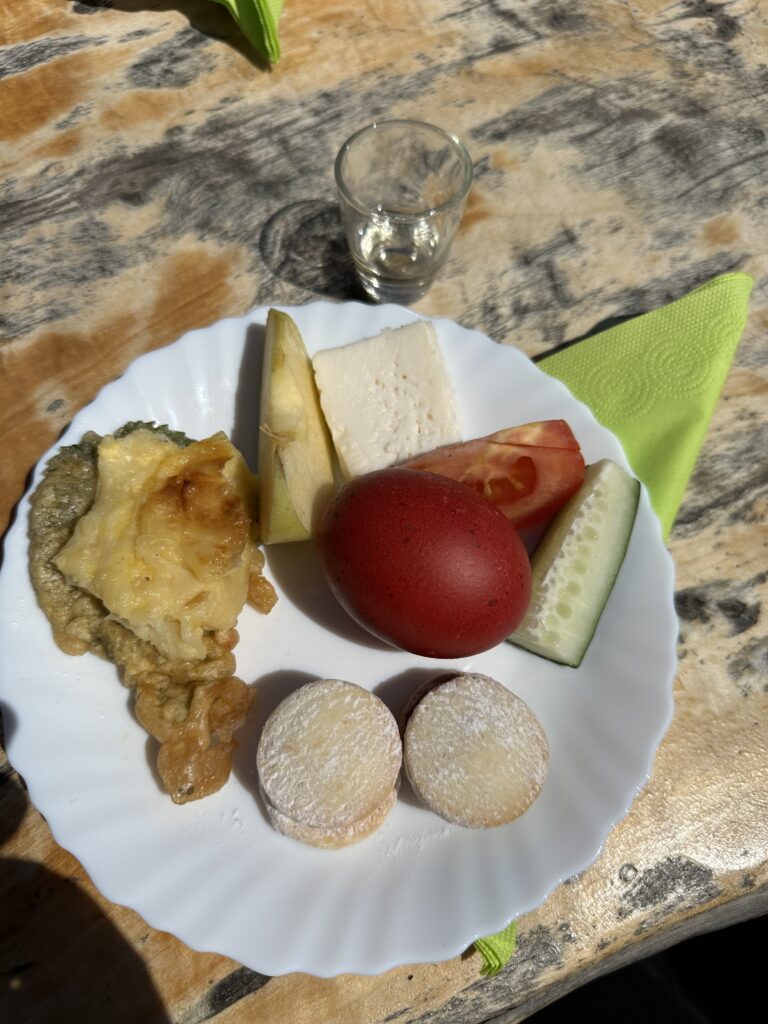
A note on brandy….we were offered brandy at nearly every stop in Croatia and Serbia. Seems it is THE welcome drink to share. Everyone apparently makes their own version of plum brandy, and the results are similar, strong, but slightly different with every taste. At this stop they had honey brandy, which was still strong, but sweeter. I bought a bottle of it as well as a container of honey, which was very tasty.
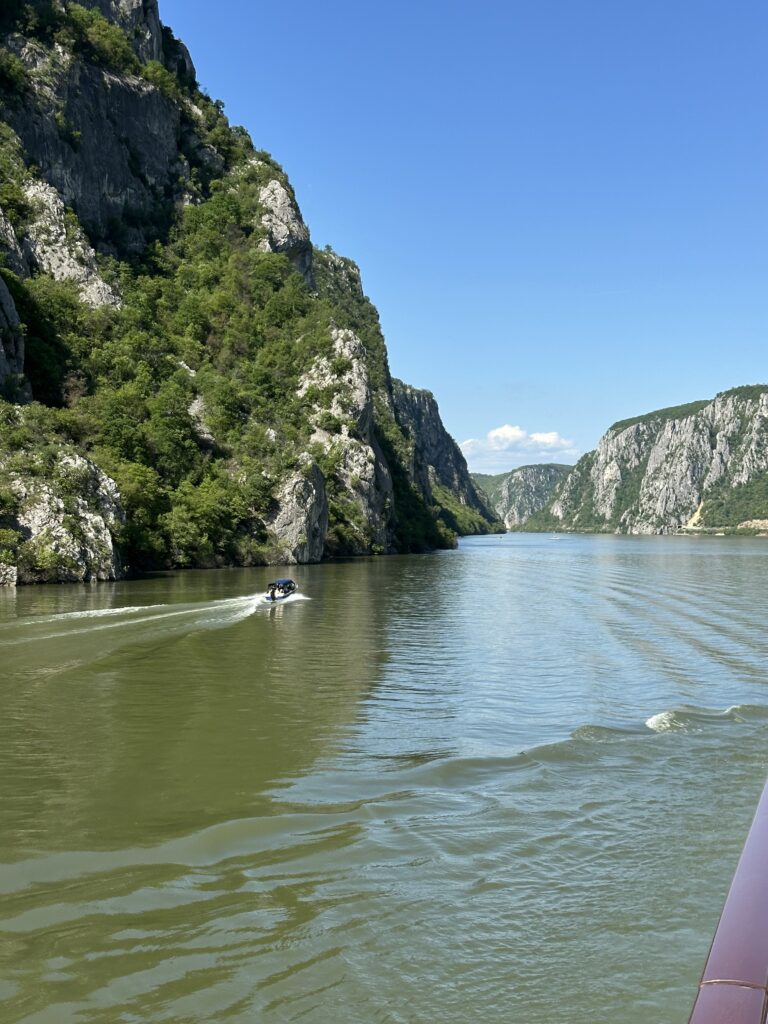
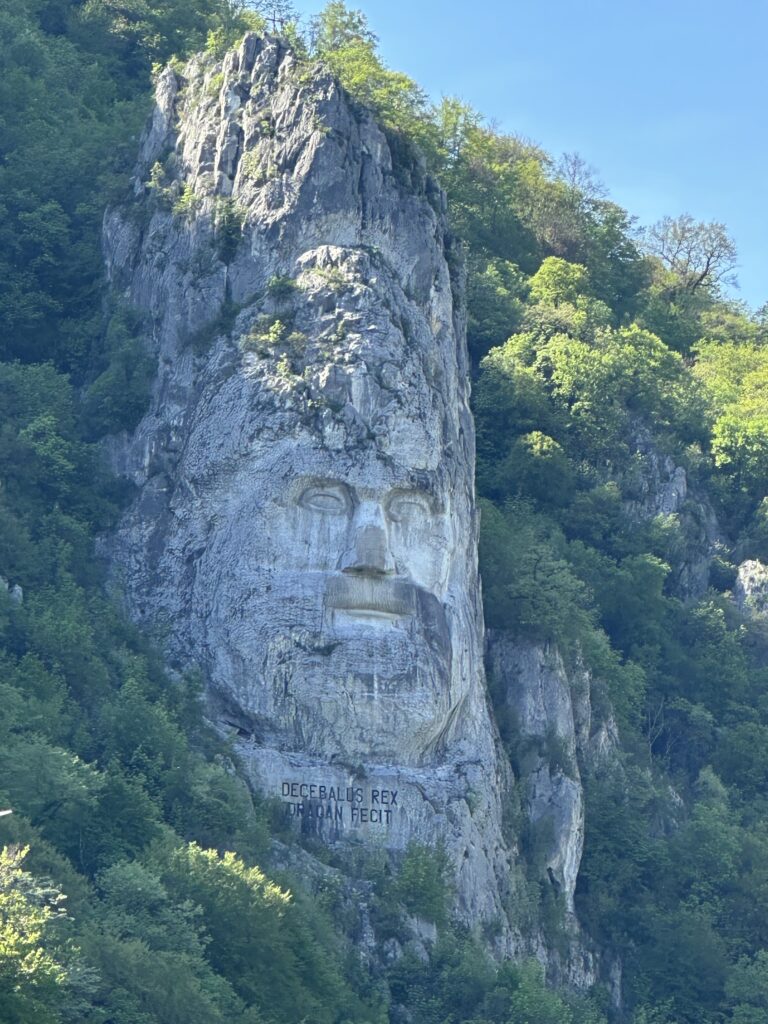
The afternoon was reserved for a sail through the famous Iron Gates on the Danube. We went topside to enjoy the sunny day and watch the cliffs come up and take a closer look at the few sights along the way including a giant rock carving of Decebalus, the last Dacian king, as well as the Tabula Traiana, a Roman memorial plaque commemorating the completion of Trajan’s military road, which was relocated due to construction of the dam.
The Iron Gates are so called because of the treacherous currents and steep cliffs that are on either side. The narrow passage between the cliffs was largely impassable before the locks were built and many sailors met their demise in the dangerous whirling eddies of water and unseen rocks.
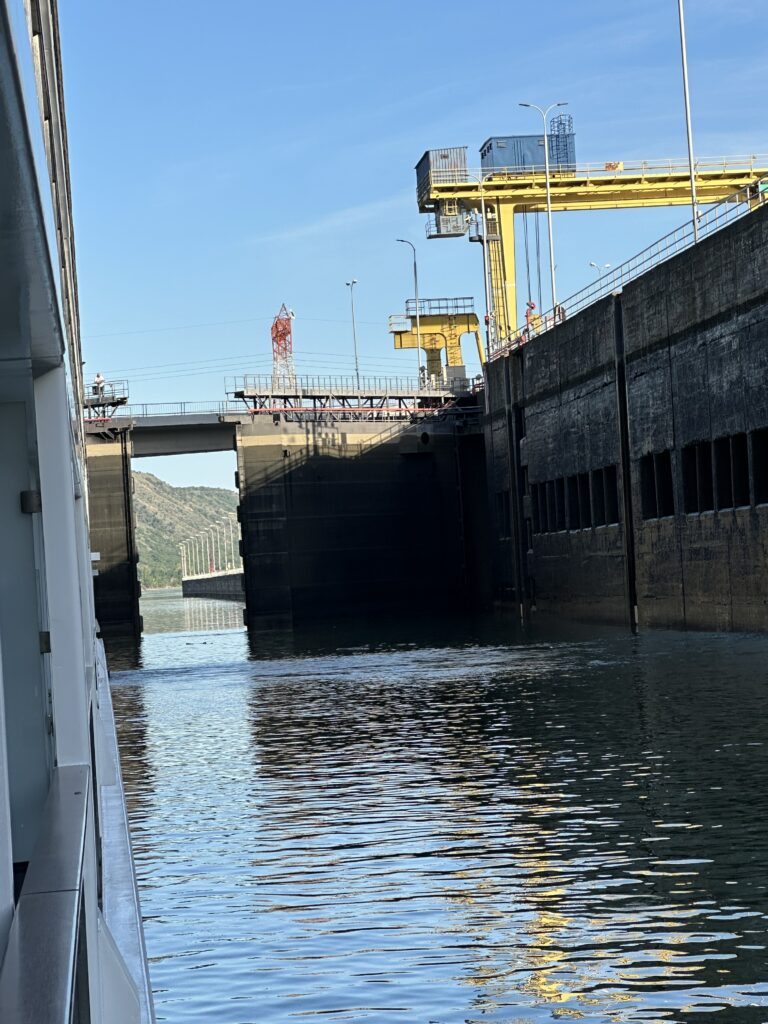
The first set of locks were built in the 1970’s, the second in the 1980’s to tame the narrow passage through the cliffs at either side of the Danube and generate electricity. Each set of locks dropped the boat about 50’. It took quite awhile to go through, but it was fascinating to watch and a nice time to grab a suntan and marvel at the technology.
An afternoon or even a day of scenic sailing is why we sign up for river cruises. The city and tourist sights we can see on any tour or on our own but unpacking once and experiencing the beauty of the country from your deck chair is something that is hard to replicate!
Where we stayed: Onboard a river vessel. The boat had an elevator, but some of the decks are split level with thresholds.
How we got there: Sailed from Belgrade, Serbia. This was part of a seventeen-day river cruise tour through Eastern Europe including Austria, Hungary, Croatia, Serbia, Bulgaria, Romania and a post-extension in Turkey.
General Accessibility Information: Serbia’s larger cities are generally accessible with accessible major hotels and sights. Many of the historical sites will have steps or cobbled surfaces, so be prepared for partial accessibility. Call in advance to verify and make specialty arrangements. See our sections on specialty apps and accessible travel for more on accessibility assistance.