Istanbul
Travel Advice for Seniors: Istanbul
How about visiting an exotic place that is part of Europe….and part of Asia! How about a place where the culture is completely different from Europe and Asia, but is still an international city in every respect? How about historical buildings that are 1500 years old, superior spas, unique dining and incredible shopping. How about Istanbul!
We arrived from Bucharest and checked in at our hotel, the Conrad Istanbul Bosphorus. It is interesting to note that most of the larger hotels are on the opposite side of the Bosphorus as the ancient attractions. Also, both sides of the city are hilly, and the Conrad was atop a steep hill. Beautiful views, especially at night, but a strenuous climb after a full day if you are walking.
Istanbul is truly where east meets west….or Ottoman Empire meets Roman/Byzantine Empire. This is reflected in the architecture, politics, religion and everyday life of those living here. While Istanbul is certainly an international city, there are still calls from the muezzin five times a day and markets of fresh spices and food abound, as old as the spice trade itself.
The country is predominantly Islam, with Sunni Islam dominant. There are five core principals of Islam: Declaration of faith, prayer, fasting, charity and pilgrimage. As a sidenote, Islam is the religion and a Muslim is one who practices Islam. Sunni Muslims are different from Shi’a Muslims in that they have different interpretations as to the line of succession after the Prophet Mohammed’s death.
Originally called Anatolia, Turkey has been fought over since inception. The Hittites created their occupying empire in the 1600s, followed by the Greek and Roman Empires. Migrating Turkish tribes set up the first sultanate and soon the Ottoman Empire began to take shape. World War I saw the partitioning of Turkey by the Allied forces. Greece invaded in the early 1900s and the Turkish War of Independence, led by Ataturk, ended in 1923, with Ataturk as President.
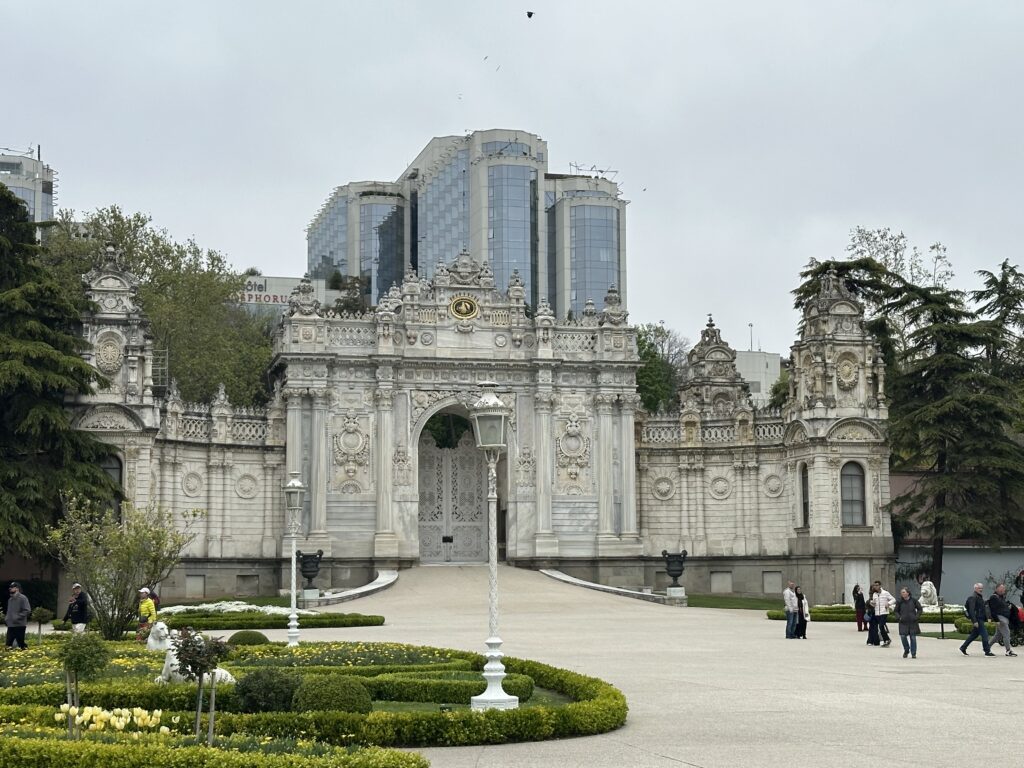
After a late lunch at the hotel, we walked to Domabahce Sarayi Palace along the Bosphorus. The palace is about a 20-minute walk from our hotel and was outstanding….original furniture, room decoration, artwork and more. Apparently, one of the six sultans who lived here had visited France and wished a Rococo-styled palace with all the Ottoman features. It was said that the palace would have cost about $2 billion dollars to be built in today’s currency. Of special note were the many Baccarat chandeliers!
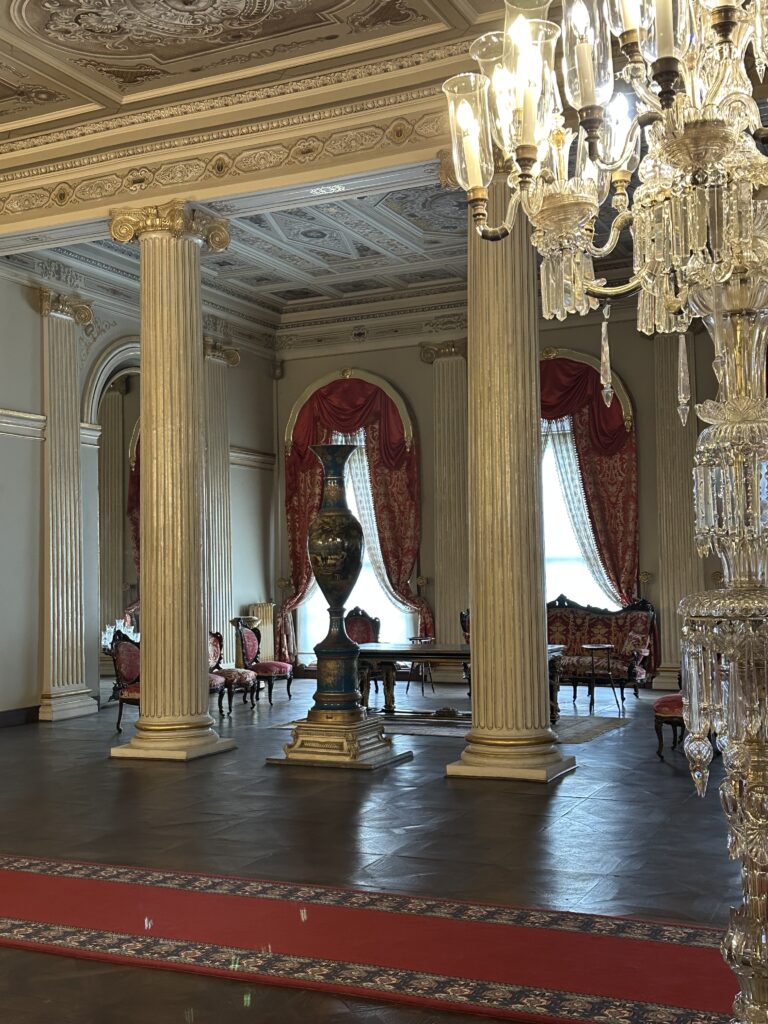
We could’ve spent a whole day here…a great intro to the Ottoman Sultan’s (and harem’s) way of life! The Palace is partially accessible only on the main floor, accessible entrance and parking, plus rental wheelchairs are available.
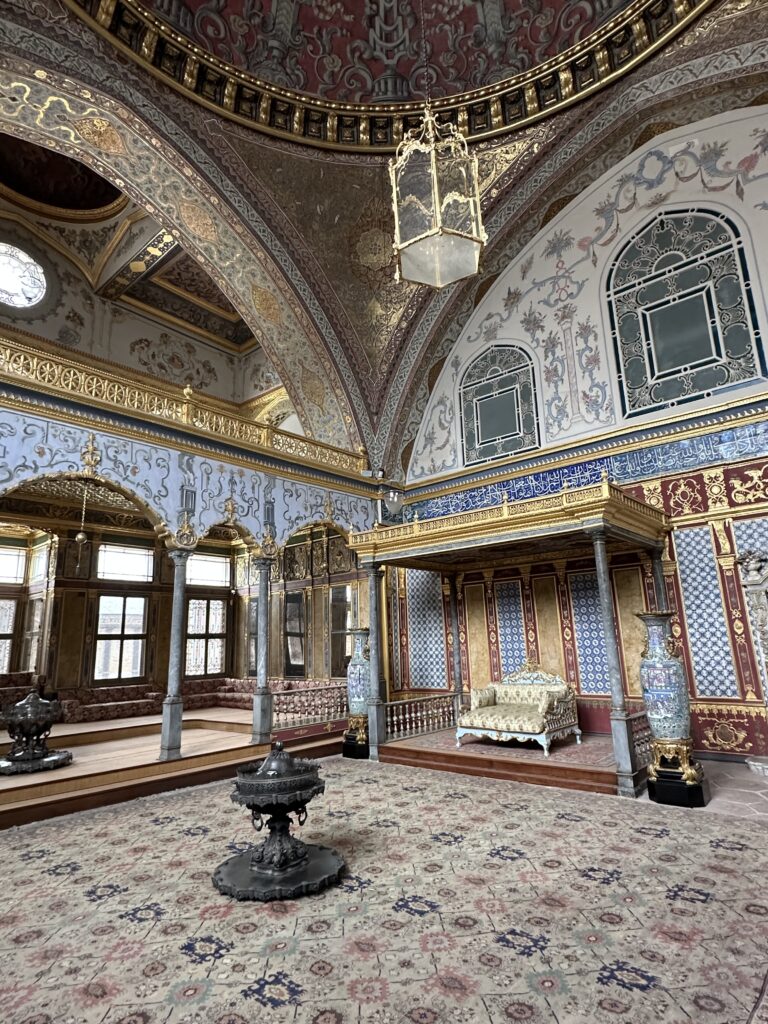
Next morning we joined a four-hour tour of Topkapi Palace and gardens. Home to sultans for over 400 years, Topkapi features tours through the palace rooms and harem, Imperial Treasury, Royal Costumes and Weaponry museums, Sacred Relics Museum and much more. Do not miss the Treasury and Relics, and don’t forget that you must cover your head for the Relics part of the tour.
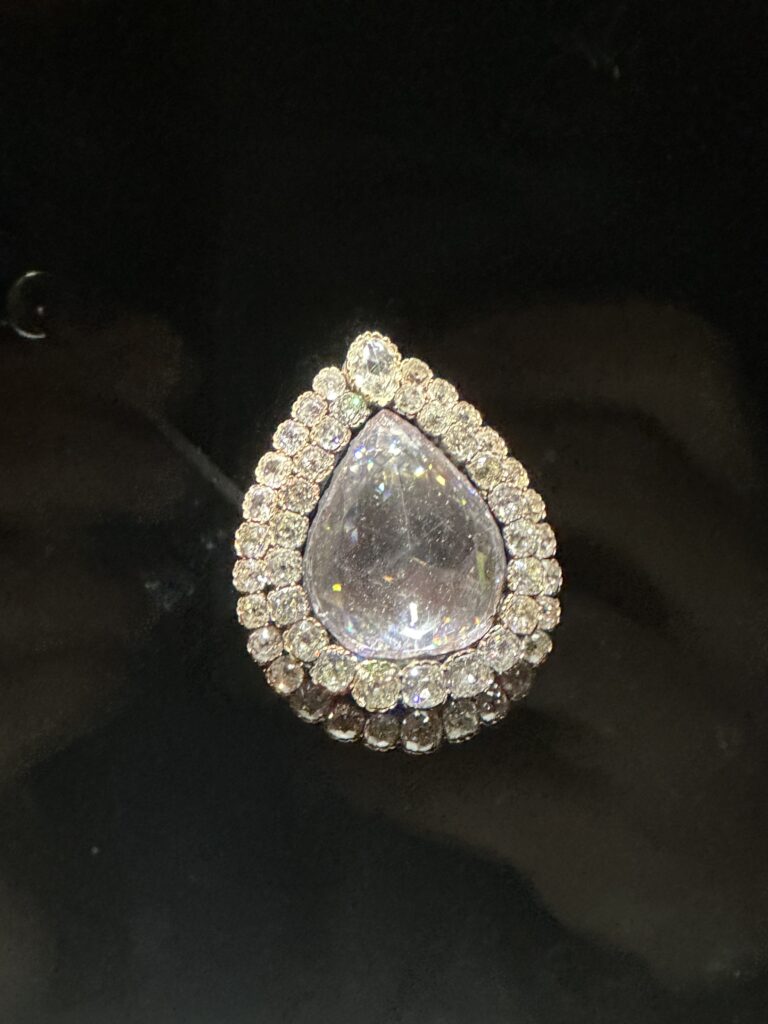
The Imperial Treasury features fantastic ancient jewels and weaponry including the jewel-encrusted Topkapi dagger and the 82-carat Spoonmaker’s diamond, fourth largest of its kind.
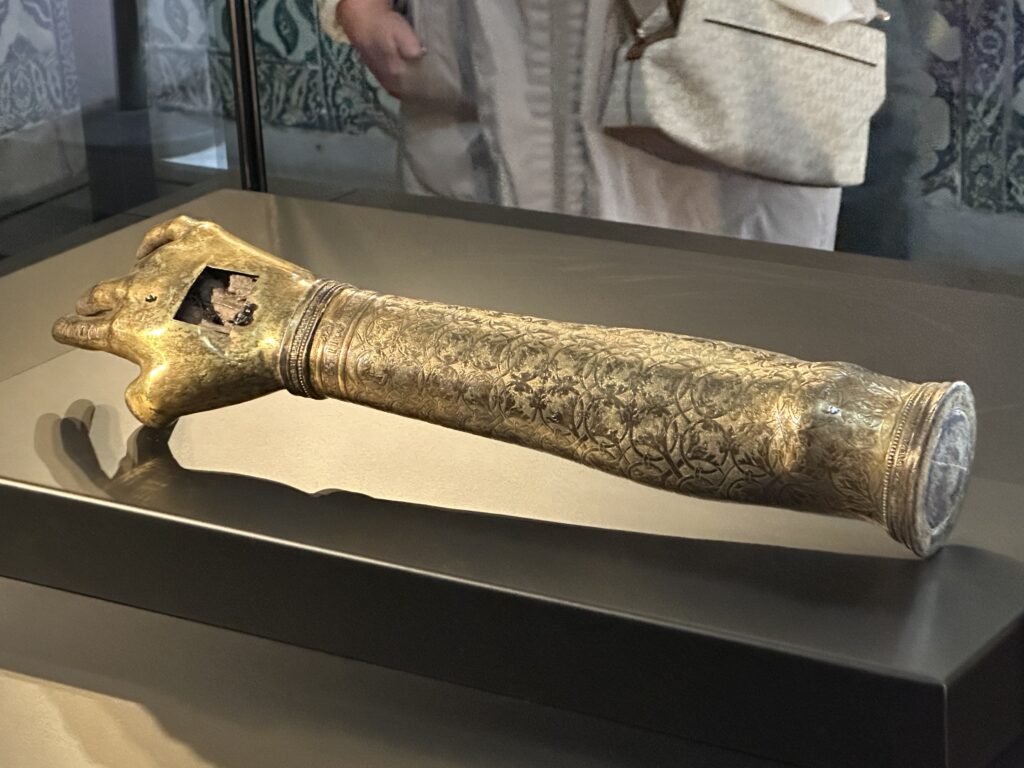
The Sacred Relics area was even more fascinating. With a background of continuous reading of the Quran, we wove our way through the very crowded exhibit area featuring the Prophet Mohammed’s cloak, swords, bow and even footprint. In addition, look for David’s sword, St John the Baptist’s arm bones encased in gold plated armor and Moses’ staff. Are they genuine? It is said that the items linked to Mohammad may prove more authentic than some of the other relics…but then, who is to know? It was enough to enjoy the moment with the rest of the adoring and awestruck crowd.
It was crowded at Topkapi, even though we were visiting during off-season, so expect to wait in line to see some of the more popular parts of the palace. Arrive early in the morning and go to the Palace rooms, Treasury and Relics areas first. The other areas are less popular and less crowded. The palace and its museums are only partially accessible, primarily due to steps and uneven surfaces. The Harem part of the Palace plus the Treasury and Relics area are more accessible than the other areas. Folks needing assistance will need to bring their own helper and rental wheelchairs are not provided.
Following the tour, we visited the incredible Spice Market followed by a two-hour cruise on the Bosphorus.
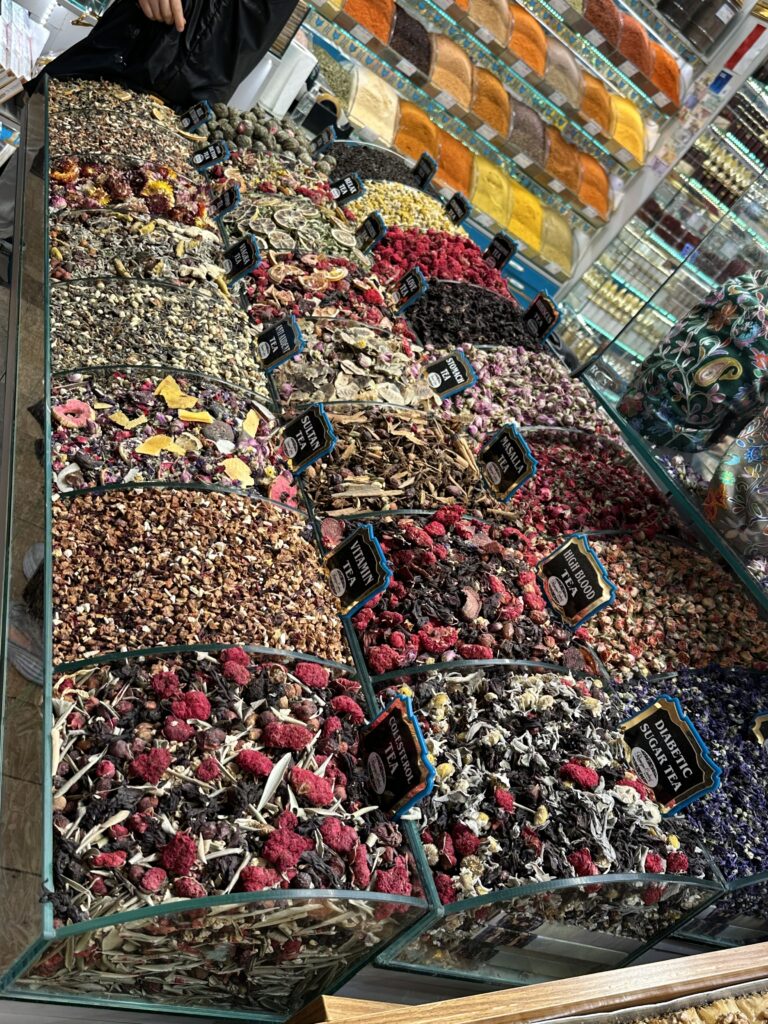
The Spice Market is a treat for the senses! This is where you pick up as much Turkish Delight as you can eat and carry home! The market is filled with custom teas, packaged food stuffs and every type of Turkish Delight candy you can think of. The Turkish Delight found here is a type of nougat with different types of fillings, coiled like a small jelly roll, rolled in pistachios and thinly sliced. The market is not nearly as huge as the Grand Bazaar, so no worries about getting lost. Also, a note to check for family-run, long-established shops for the best product and selection. The Spice Market is accessible with flat surfaces.
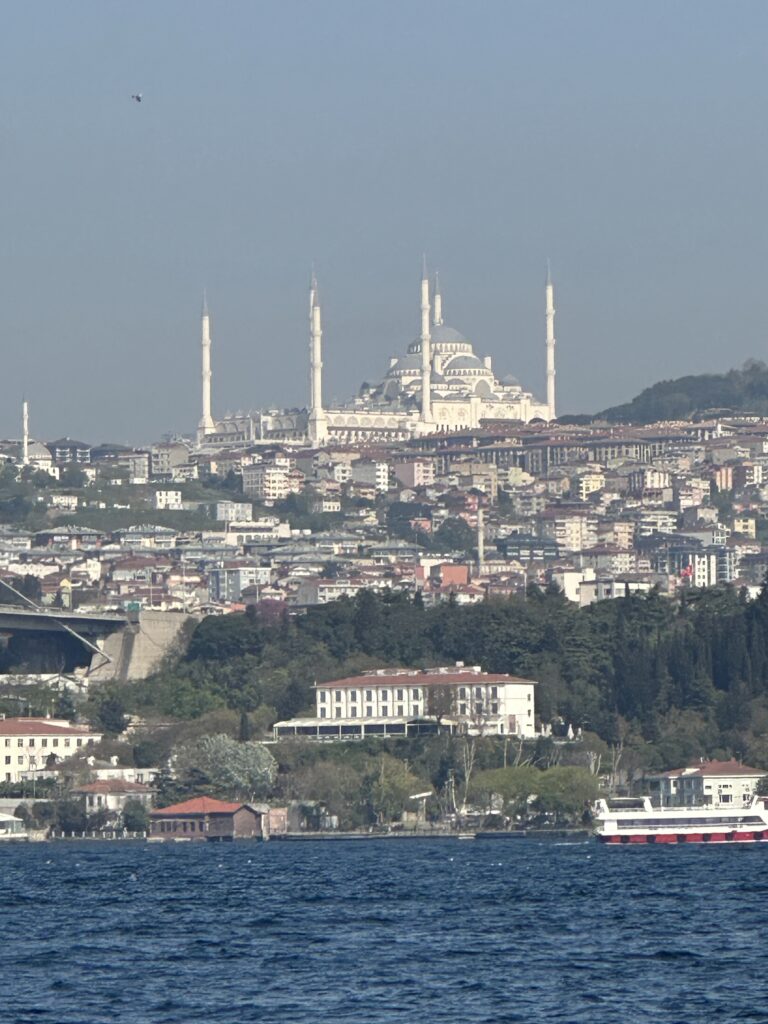
A cruise on the Bosphorus is an integral part of every trip to Istanbul. The water is a beautiful dark blue and if you’re lucky you may spot a dolphin or two! We took a small yacht out for a two-hour cruise with a small group. The strait is very busy with boat traffic, tourist as well as freight. It was a very nice sail and while heavily trafficked, it was still a smooth ride. Tea was served and it was a relaxing ride with great narration on what we were seeing. We made a stop on the Asian continent side and then back over to the European continent side. The docks were pretty flat, but assistance is needed to get on/off the boats. Also, it was a bit windy on the boat in the open air, so you may want to bring a jacket.
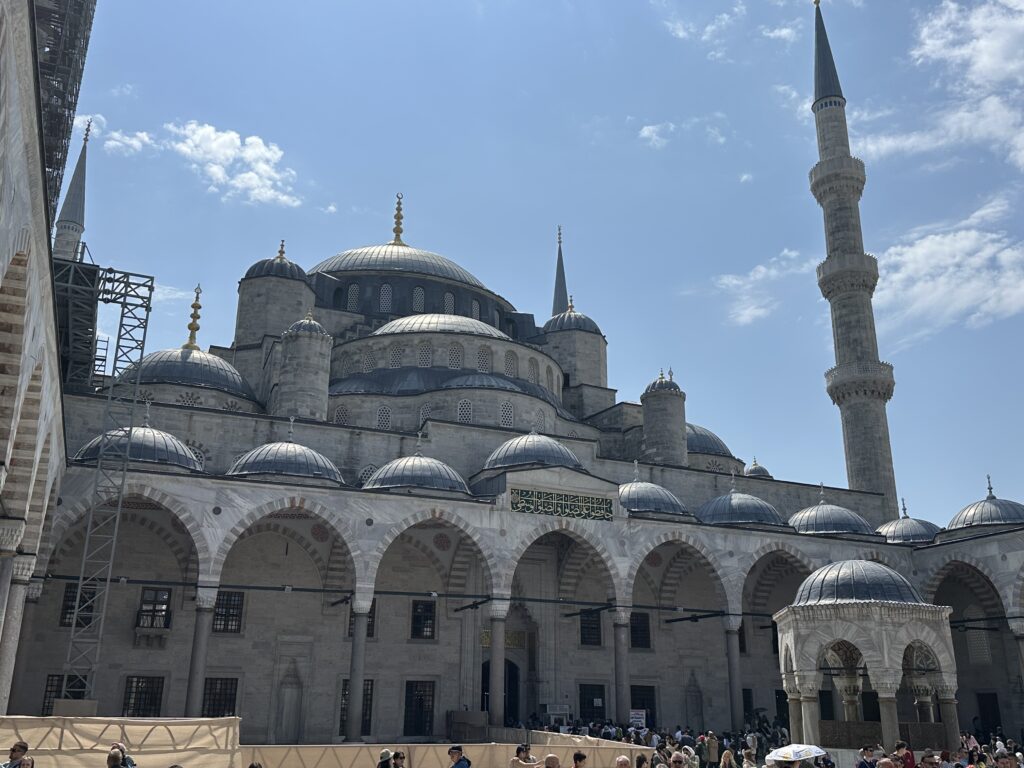
The third morning we joined a four-hour tour of the Hagia Sophia and Blue Mosque, both part of the UNESCO World Heritage Areas of Istanbul. These are two must-see structures in Istanbul. Sidenote: You will need to remove your shoes and cover your head to enter a mosque. Also, you won’t be allowed onto the main floor where the worshiping occurs, but you have a much better view from the gallery.
The visits to these places were truly overwhelming as they were so ancient and so beautiful! So much history here, you really need a guide to help you take it all in.
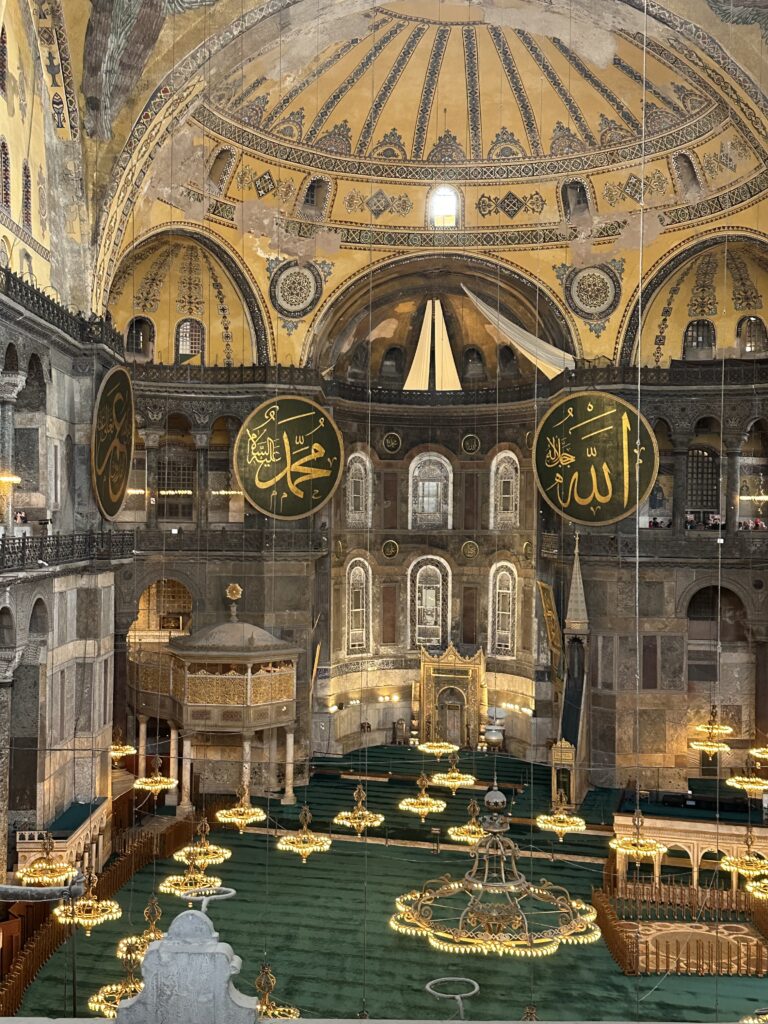
The Hagia Sophia Grand Mosque truly leaves one without words. Interestingly, it was originally built as a Christian Basilica in 537 AD and has been fought over for centuries due to its size, and its powerful symbolism between cultures. A combination of Roman and Byzantine architecture, many of the incredible Byzantine tiling was covered by plaster after it changed to a Mosque. Some of the original tilework has been preserved for tourists, one can only imagine what it may have looked like at one time. It’s amazing architecture and huge dome, created a standard for other future mosques.
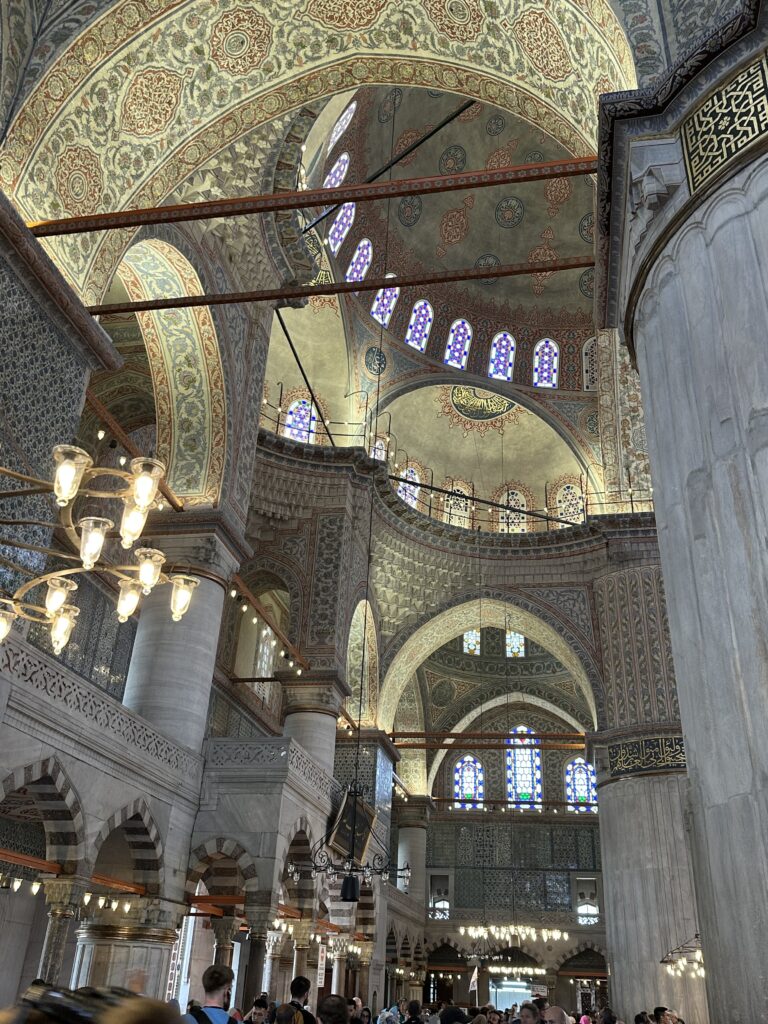
The Blue Mosque was commissioned in the early 1600’s by Sultan Ahmed I during the height of the Ottoman Empire. Its stunning blue interior tiles and six minarets make up its unique architecture showcasing the power of the Ottoman Empire. The Mosque is a functioning religious site, and tourists are allowed on the second level, but not in the area of prayer.
We are so used to seeing Catholic and Protestant churches and cathedrals, that it was hard to understand the ornamentation and openness of the areas of prayer. The mosques have a plaque indicating the direction of Mecca and it is this direction all Muslims face when praying. The Mosques also serve as community centers and places of religious instruction.
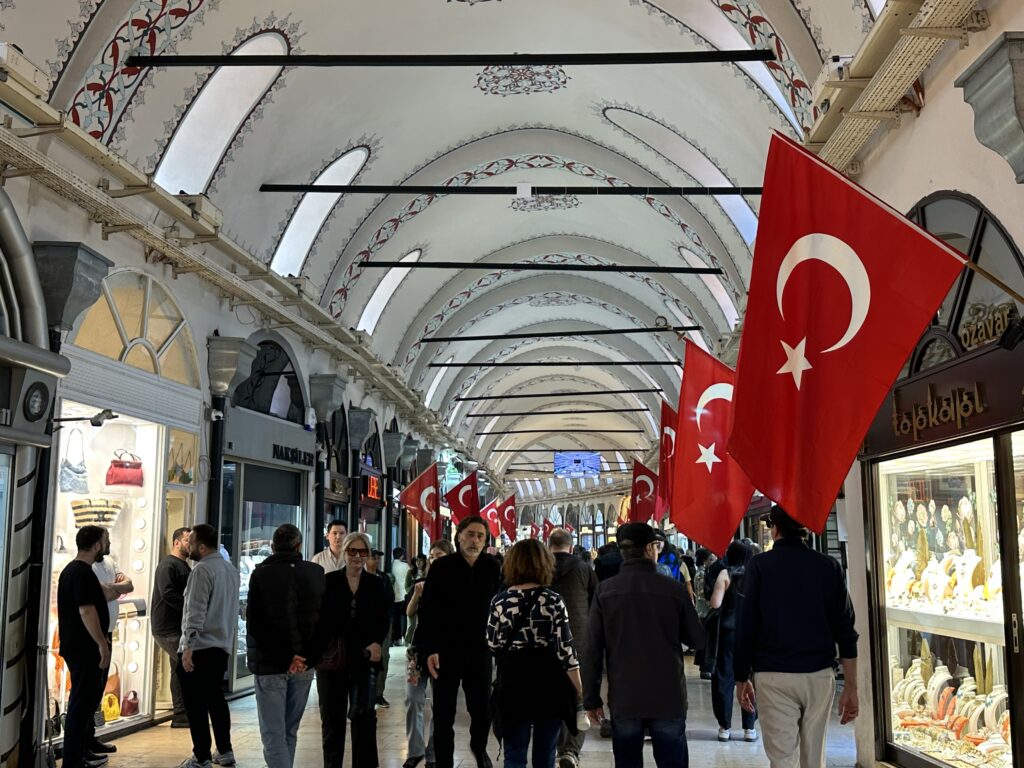
Our final stop of the day was a much-anticipated visit to the Grand Bazaar. To say it is huge is a gross understatement. You will want to take a photo of the gate you enter through and at every corner you turn so you can find your way back, but we did this and STILL got lost. Thankfully, the shopkeepers were all very kind, with most speaking at least a little English, and were happy to point us in the right direction (several times!). Yes, that’s how big it is! Most areas appeared to be pretty flat, but there were some steps.
About anything you can think of is for sale in the Grand Bazaar. There was a lot of gold jewelry in one area, ceramics in another, clothing in another, home goods in another and tea and Turkish Delight shops scattered throughout. There were also many souvenir type items for sale. We bought a few things but were mostly concerned with trying to figure out how to exit, so didn’t enjoy it as much as we thought we would! As it turned out we shouldn’t have worried and should’ve taken more time to poke around and enjoy ourselves.
Also, a side note here on Turkish coffee: Don’t be fooled into thinking there is such a thing as Turkish coffee. There is a Turkish METHOD of coffee preparation, but they don’t grow it there. The method is an old Arabic tradition involving boiling finely ground coffee in water in a cezve, a small, long handled pot. This makes for a very strong coffee, and the grounds settle in the bottom of your cup, while the characteristic thick foam accumulates on the top of the cup. The coffee is served in small demitasse cups. The coffee equipment was a popular item in the Bazaar.
After all the bustle and chaos of the Grand Bazaar, we were ready for some peace. We had made appointments at Cagalogiu Hamami for a traditional Turkish bath (see separate post about the bath experience). Yes, we had the traditional bubble massage…and it was awesome! We also had dinner at a separate area of the Hamami, which was rooftop and very good, albeit expensive. Apparently, inflation is running at 40% over prices a year ago…you will definitely notice this when dining out. The Hamami, unfortunately, was not accessible, nor the restaurant as they were both in the same building.
It would’ve been nice to spend another day revisiting the Grand Bazaar (when we weren’t so nervous about getting lost!) and to visit some of the other palaces, but we did a pretty good job of hitting the highlights. To be sure, a return visit is in order. Actually, I enjoyed this itinerary so much, I would do it again!
Where we stayed: Conrad Istanbul Bosphorus. Accessible parking, route, elevator and rooms.
How we got there: Flew from Bucharest, Romania. This was part of a seventeen-day river cruise tour through Eastern Europe including Austria, Hungary, Croatia, Serbia, Bulgaria, Romania and a post-extension in Turkey.
General Accessibility Information: Some of the larger Turkish cities have accessible newer major hotels and some sights, however, infrastructure may be lacking, and places may only be partially accessible. Accessibility outside major cities may be difficult due to historical areas and lack of infrastructure. Call in advance to verify and make specialty arrangements. See our sections on specialty apps and accessible travel for more on accessibility assistance.