Osijek
Practical Travel Advice for Seniors: Osijek
Having never traveled to this part of the world, we were very excited to begin our tour of the Balkans. Our first stop was in Croatia.
Croatia was first formally inhabited by the Roman empire, followed by occupation by Slavic tribes and a long fight back and forth between the Ottoman Empire and the Habsburg Empire. Following World War I, Croatia became part of Yugoslavia and during World War II followed the German cause. Yugoslavia’s demise in 1991 inspired a try for independence with yet another war ending successfully in 1995.
Croatia has had a tumultuous past and there are still signs of the recent war everywhere. Several buildings remain damaged, but it is evident that rebuilding is slowly happening.
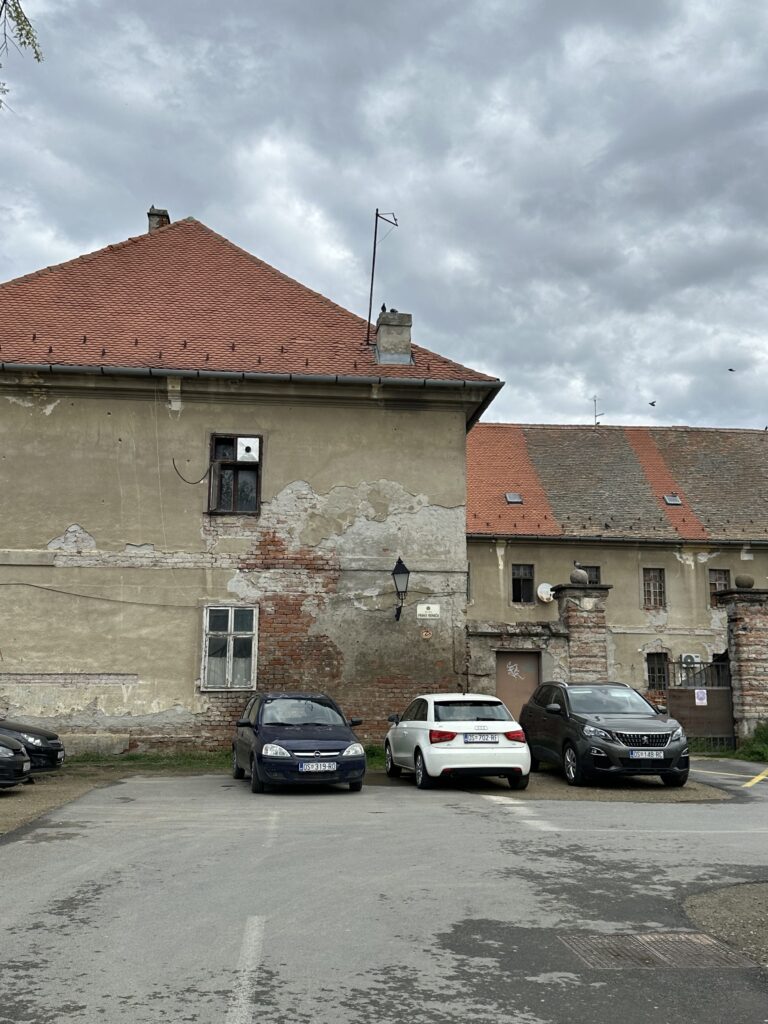
Many of the governmental and historic buildings have been rebuilt and with Croatia joining the EU in 2013, it is common to see new shopping centers springing to life. German, French and English shops are showing up as well as new infrastructure which is a welcome sight from the destruction of other parts of the small towns and cities.
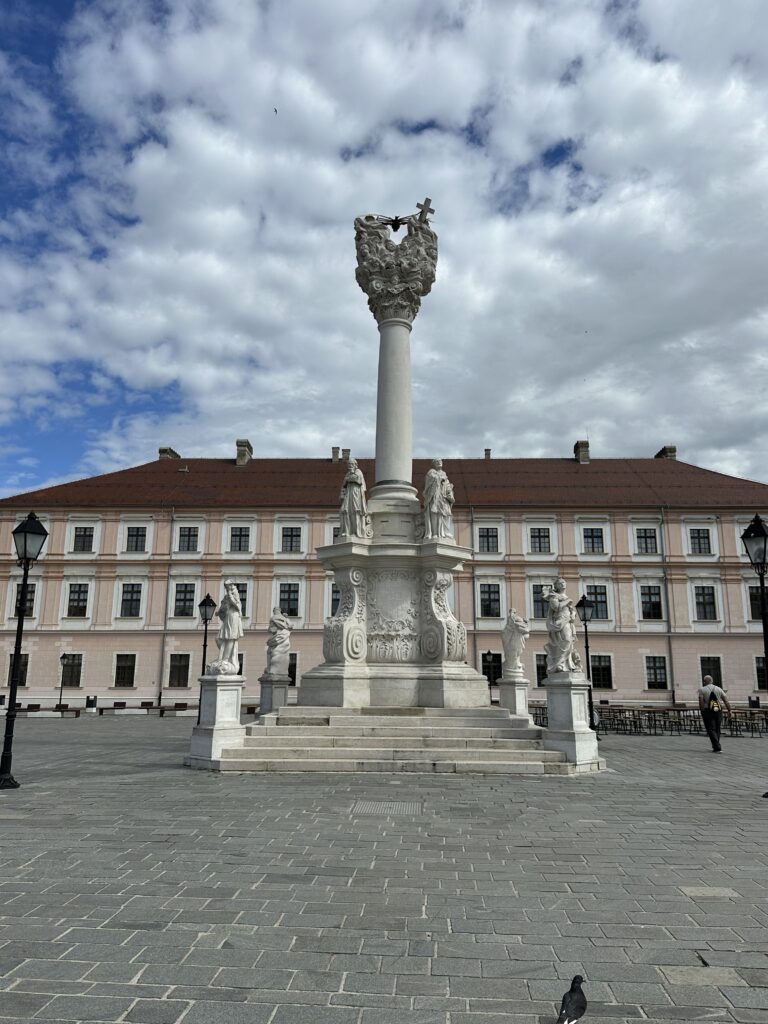
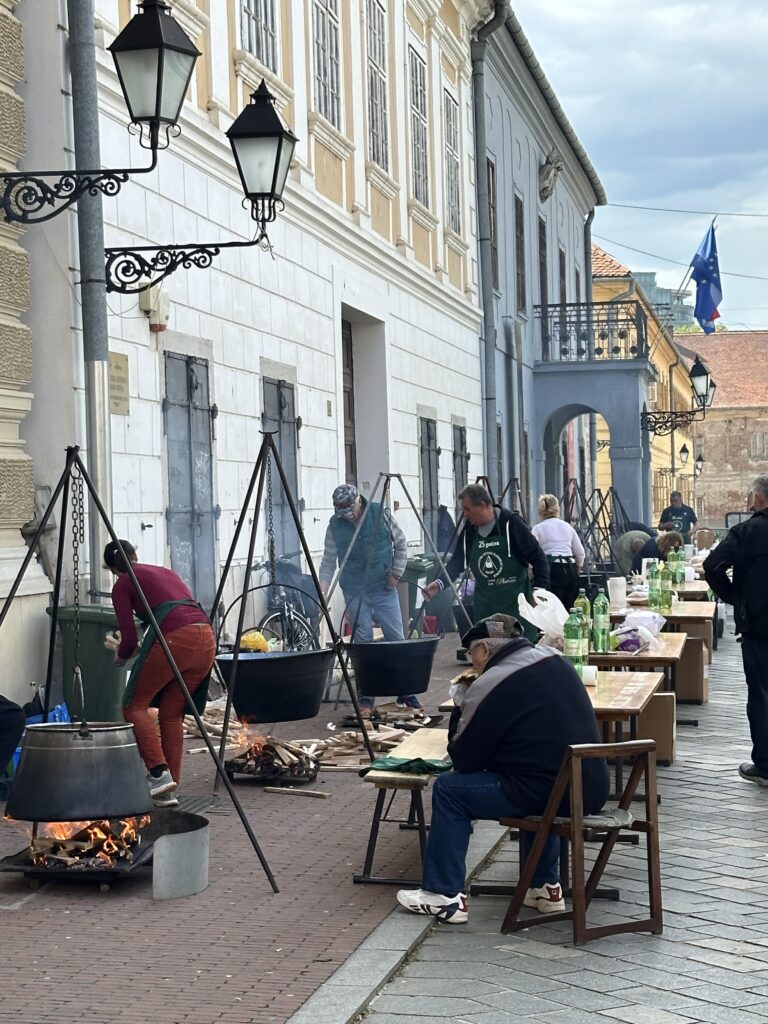
We did a walking tour by the fort at Osijek followed by a visit to the city square. An otherwise humdrum walk suddenly turned into something fascinating when we reached the city square where many tables were set up and people were making vast cauldrons of stew. Apparently, to celebrate Good Friday, every year in Osijek the entire community gets together for a free shared meal of fish stew in Holy Trinity square. It was interesting to see everyone busy preparing for the event and hearing the backstory. The passageway to the City Square was fairly accessible, but there were curbs and uneven parts of the pathways.
We had many questions about the war and what life was like during that time.
All our questions were answered by a family visit later in the morning. We don’t usually like home visits, but this one was a fountain of information….and the homemade plum brandy and lovely baklava-style coconut cake was recipe-sharing worthy! Our hostess was happy to share her life with us and did not leave anything out when sharing the breakup of her and her husband’s families due to the war, the difficulty being a refugee in Germany and the further difficulty of coming home to nothing and starting over from scratch.
It was a harrowing and disturbing account of what can seemingly happen to any country at any time. The Serbia/Croatian war, like so many others was partially about religious and cultural differences, but also about former World War II issues, as well as nationalistic causes. A visit with someone who lived through it was a stark reminder of how fortunate we are here in the US. Croatia joined NATO in 2009.
Our afternoon destination was Vukovar and the Eltz Manor Complex followed by a trip to a local winery.
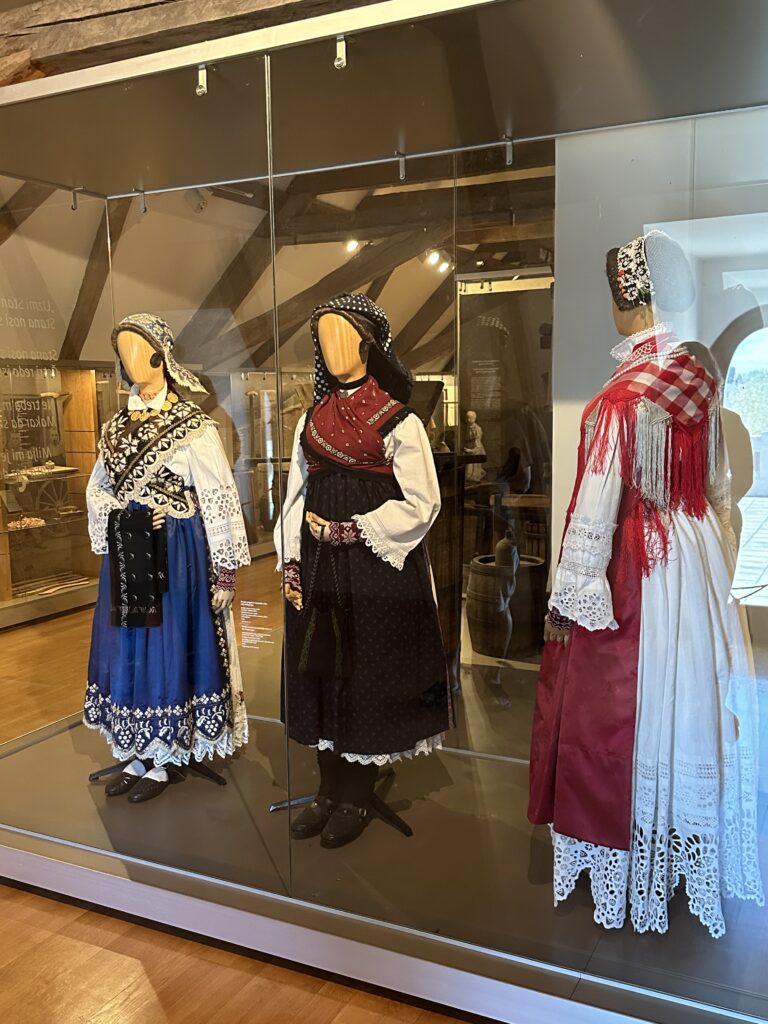
We love going to historical areas that show what life was really like at the time and the Palace was no disappointment. The complex includes the Viennese-styled residence, St Roch Church and the Vukovar Municipal Museum with its collection of cultural heritage items including full rooms of furniture showing a slice of life in the 18th century and many rooms of costumes from various areas.
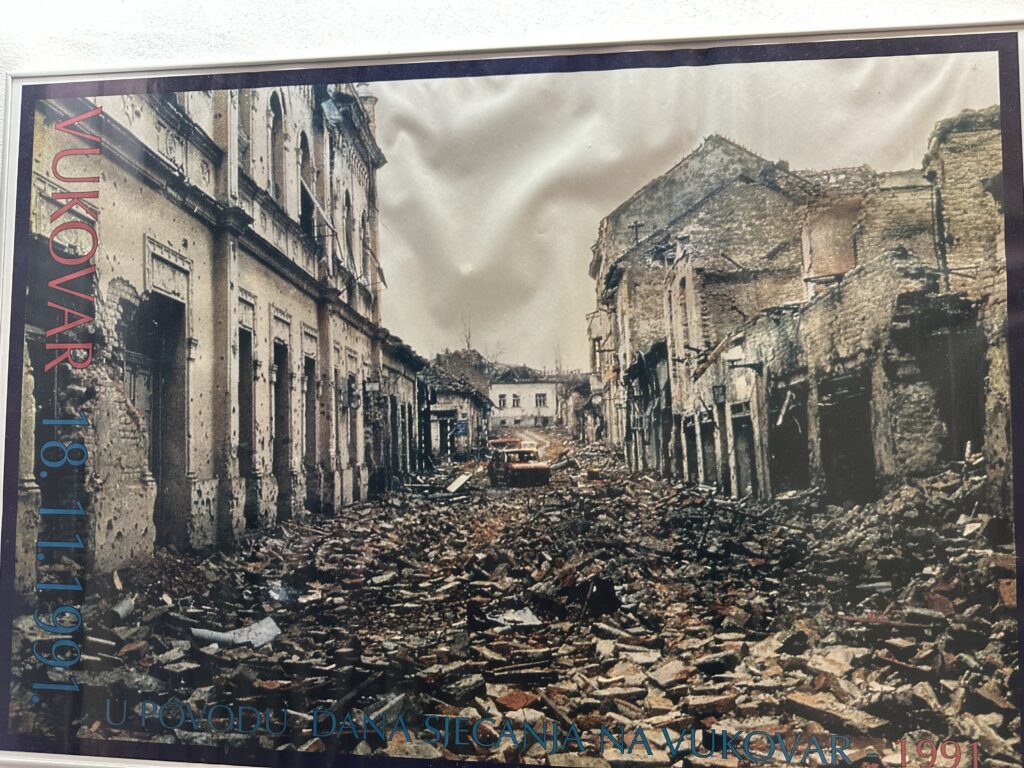
Of special interest was a series of before the war/after war photos of the Palace and grounds, which were completely rebuilt. The Battle of Vukovar in 1991 was a particularly nasty siege that saw horrible damage to the city. The museum has an accessible parking lot, entrance and restroom.
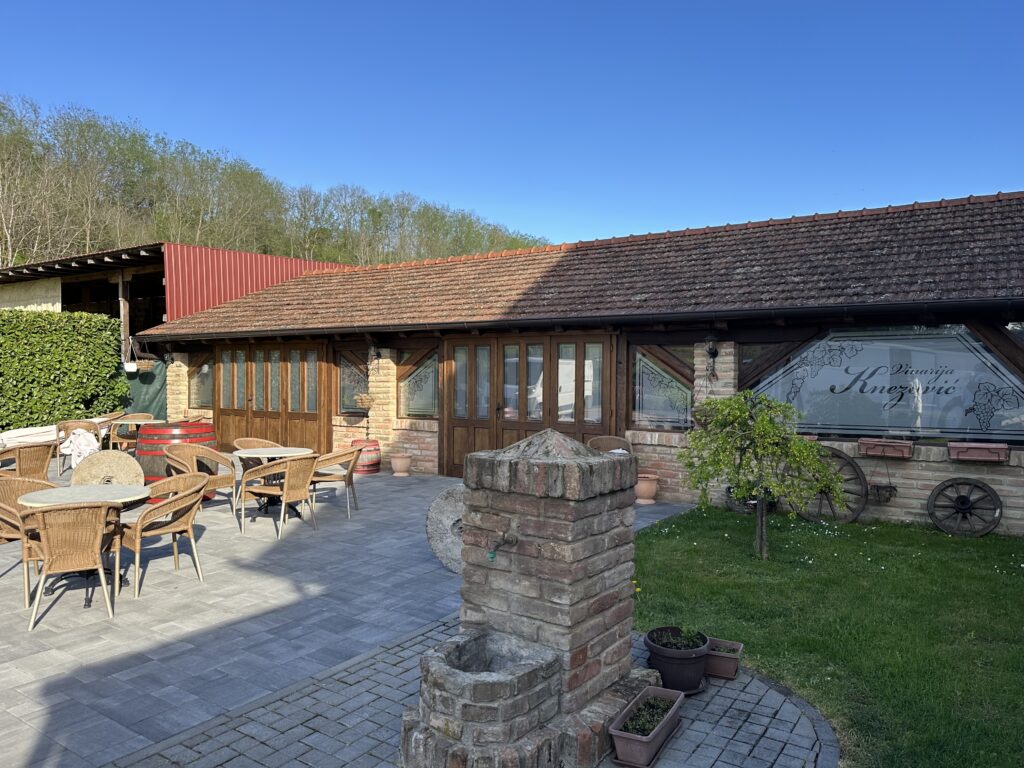
We had heard a bit about Balkan wines, so we were optimistic about our stop at Vinanja Knezovic in Ilok. The area is known for its white wines featuring Chardonnay, and a curious Italian Riesling and Gewurztraminer. The red wines presented were a Rose and a Merlot. It was an interesting tasting selection, nothing really outstanding to our taste, but the owners were enthusiastic and entertaining, the tour educational and the tasting environment was rustic and welcoming. It was nice to enjoy a lighter time after the haunting account of the war times from earlier in the day. The tasting area appeared to be accessible, though the aisle ways were narrow.
We didn’t get to experience much of Croatia as we were cruising on the Danube, so only were able to see sights on that side of the country. There are many more attractive parts of the country such as Zagreb and Dubrovnik plus Pula and Split on the coast. There are also many wonderful national parks, and the lovely coastal areas are worth a week’s visit on their own. However, that will have to be on another cruise as we were setting sail for Serbia that evening!
Where we stayed: Onboard a river vessel. The boat had an elevator, but some of the decks are split level with thresholds.
How we got there: Sailed from Kalocsa, Hungary. This was part of a seventeen-day river cruise tour through Eastern Europe including Austria, Hungary, Croatia, Serbia, Bulgaria, Romania and a post-extension in Turkey.
General Accessibility Information: Croatia’s larger cities are generally accessible with accessible major hotels and sights. Many of the historical sites will have steps or cobbled surfaces, so be prepared for partial accessibility. Call in advance to verify and make specialty arrangements. See our sections on specialty apps and accessible travel for more on accessibility assistance.