Rousse
Travel Advice for Seniors: Rousse
Our second stop in Bulgaria was Rousse, for a full day of touring beginning in Rousse, then Arbanasi and ending in Veliko Tyrnovo.
Rousse is the sixth largest city in Bulgaria and is called “the Little Venice” of Bulgaria due to its neo-Rococo and neo-Baroque buildings. We took a walking tour past the Opera House, Monument of Liberty, Theater and Concert Hall and Old City Center.
Rousse is also famous for the ancient Orlova Chuka Cave as well as beautiful walking trails along the Danube. We didn’t have time to visit these, but we did have time to travel to a few wonderful sights around the area.
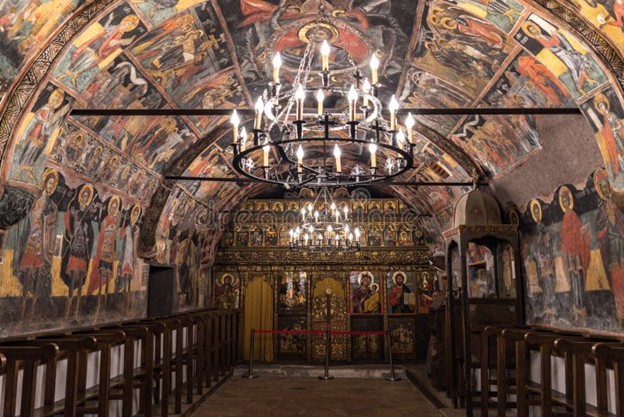
The highlight of the day was a seemingly nondescript ground level stone church with a tiled roof. The Sveta Troitsa or Holy Trinity Church is located in Arbanasi. While the outside was very basic, the inside was a work of art. Every square inch of the inside of the small church including its roofing beams was covered in paintings. Not really by anyone famous or of any famous religion, it was just beautiful in its simplicity and the detail was incredible. That the inside had been preserved for so many years in its original painted glory was unbelievable. The brightness of the colors was truly breathtaking, unfortunately no pictures were allowed, which is probably why it still looks so great!
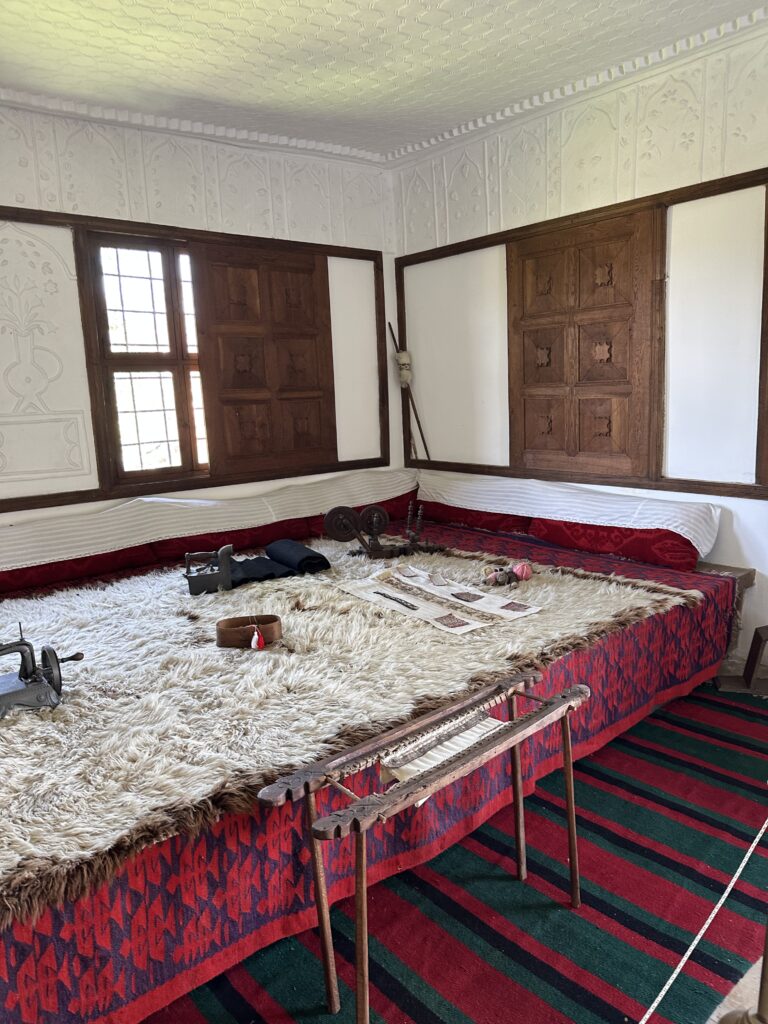
Also, while in Arbanasi, we also toured the Museum Konstantsaliev House, a 17th century, well-preserved merchant home. It was fully furnished even down to pots and pans, pictures, linens and tea service. The home was an interesting assemblage of both Western and Turkish areas. For instance, there was a Turkish seating area that was a typical elevated platform for sitting cross-legged with tea service. The beds were also typical Turkish flat platforms. However, the eating areas had booths for seating and a more typical firelit stove area for food preparation. It was interesting to see how the two cultures mesh in one home. Always interesting to see a furnished period home with all of its accessories…gives you a glimpse into what life was really like (at least for the wealthy class) at the time.
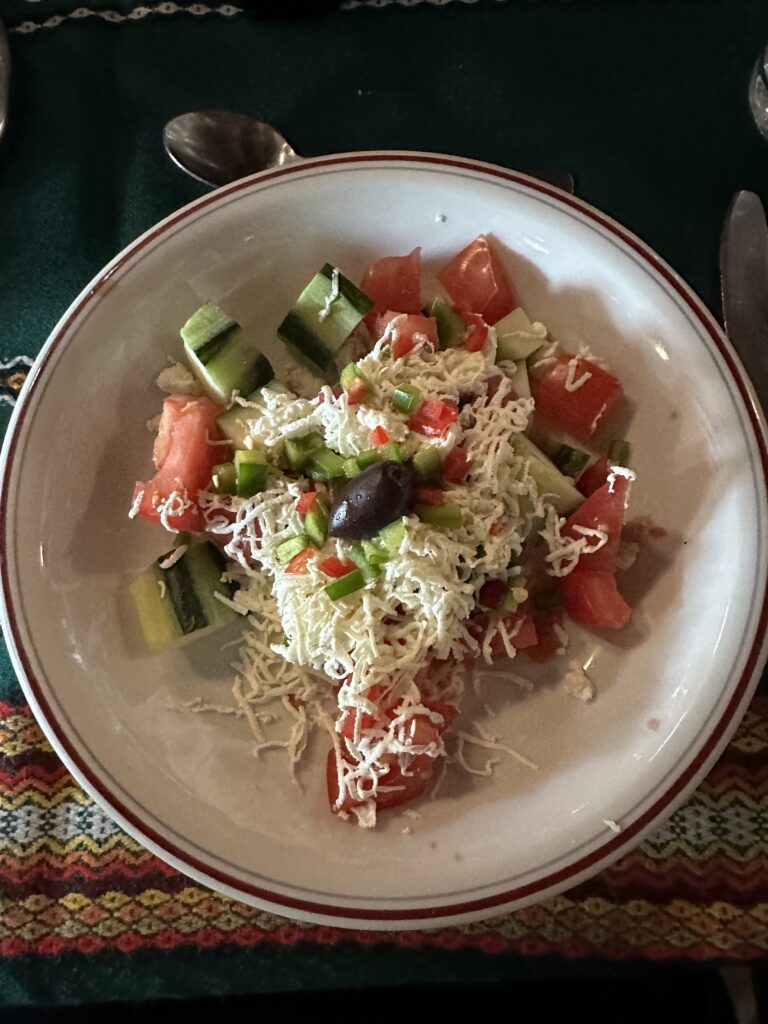
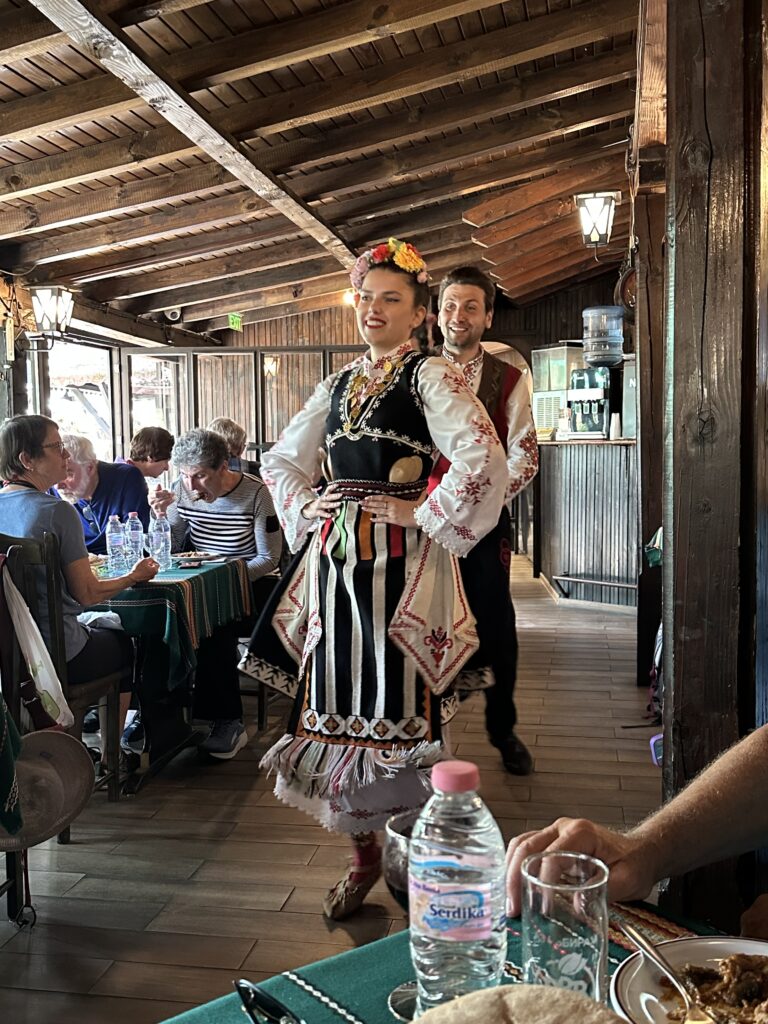
For a late lunch, we were treated to a typical Balkan meal and some folk dancing. The meal was very good and featured a salad of fresh tomato, cucumber and feta, followed by some bread and a main course of roasted beef stewed with tomato sauce and vegetables, and paprika of course! Dessert was a type of delicious baklava cake. The folk dancers were in traditional costumes and were talented and entertaining. It was an enjoyable interlude.
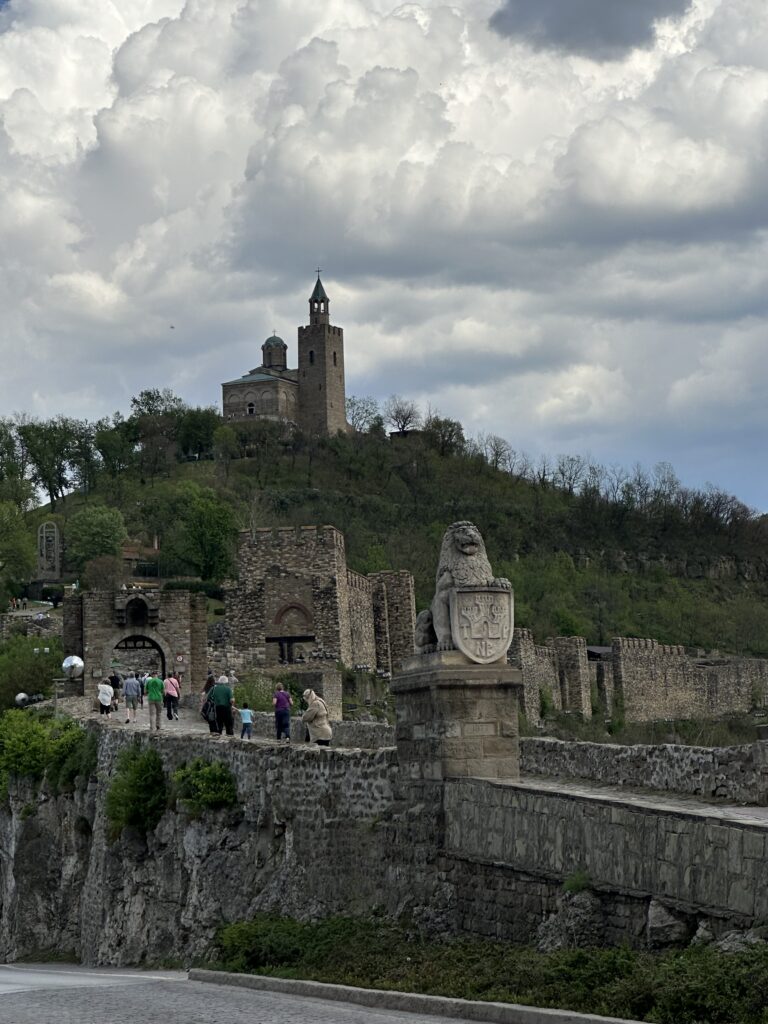
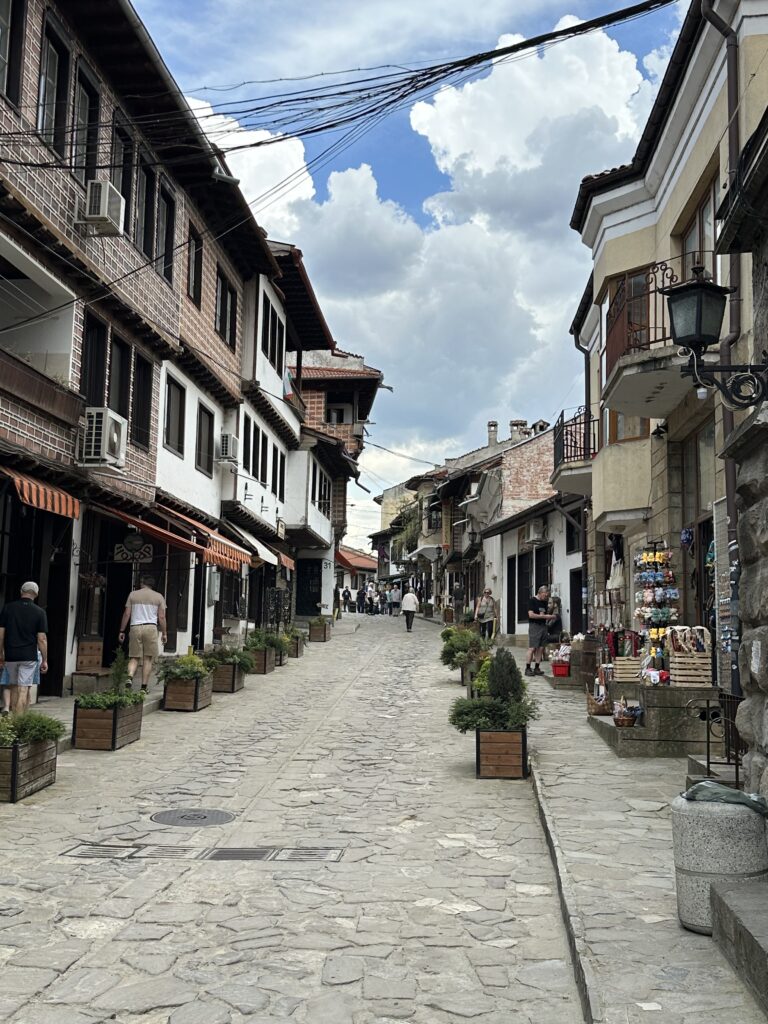
We then made our way out to Veliko Tyrnovo Medieval town and architectural reserve, with its very imposing structures high upon a hill. Known as the “City of the Tsars” it was the historical capital of the second Bulgarian Empire.
The history of this area was fascinating capsule of Bulgarian history. The earliest inhabitants arrived around 4200 BC and stayed through the Bronze and Iron Ages. At the end of the fifth century a Byzantine fortress was built on the hill and was one of the strongholds of easternmost Rome. The twelfth century saw the construction of the fortress and castle making it the capital of the Second Bulgarian State and the Second Tsardom.
Since we had had a few long days of touring and a big lunch, we decided not to climb the very steep hill to see the fortress and instead wandered around the lovely town for a bit, enjoying the architecture.
This was our last day of sailing and while we were sorry to see our traveling hotel room leave us, we were excited to see Bucharest, Romania, our next stop!
Where we stayed: Onboard a river vessel. The boat had an elevator, but some of the decks are split level with thresholds.
How we got there: Sailed from Vidin, Bulgaria. This was part of a seventeen-day river cruise tour through Eastern Europe including Austria, Hungary, Croatia, Serbia, Bulgaria, Romania and a post-extension in Turkey.
General Accessibility Information: Bulgaria’s larger cities are generally accessible with accessible major hotels and sights. Many of the historical sites will have steps or cobbled surfaces, so be prepared for partial or little accessibility. Call in advance to verify and make specialty arrangements. See our sections on specialty apps and accessible travel for more on accessibility assistance.