Vidin
Travel Advice for Seniors: Vidin
The Danube forms Bulgaria’s northern border, separating it from Romania. Its eastern border is on the Black Sea, and it also touches Turkey, Greece, Macedonia, Monte Negro and Serbia. Sofia is the capital of Bulgaria and is near the mountainous southwest.
Like many of the Balkans, Bulgaria’s past has been checkered with wars and occupation. Byzantines developed parts of it originally and a five-century occupation by the Ottoman Empire began in the fourteenth century. The Russo-Turkish War of 1877-78 brought eventual independence in 1908.
The World Wars created periods of occupation and independence, ending with communist occupation following World War II. The communist regime ended in 1989 and in 2004 Bulgaria become a member of NATO, in 2007 a member of the European Union.
Bulgaria now finds itself with many unwanted remnants of communist times. Many communist prefab block apartment buildings remain with dilapidated exteriors. Many of its factories are deserted and small family farms have been sold to the highest commercial bidder. Many of the people which once lived in the small villages and homesteads have left for the major cities and work opportunities, if not left the country for good. The cities we toured along the Danube were a grim reminder of Bulgaria’s communist past and how challenging it is to move forward.
This was our experience only in two cities along the Danube, Vidin and Rousse. There are many other wonderful cities and sights to explore including Sofia, Polvdiv and Varna on the Black Sea to name a few. When you’re on a river cruise, you are subject to sights that are within an hour or two radius from your port, so we probably did not see the very best Bulgaria has to offer.
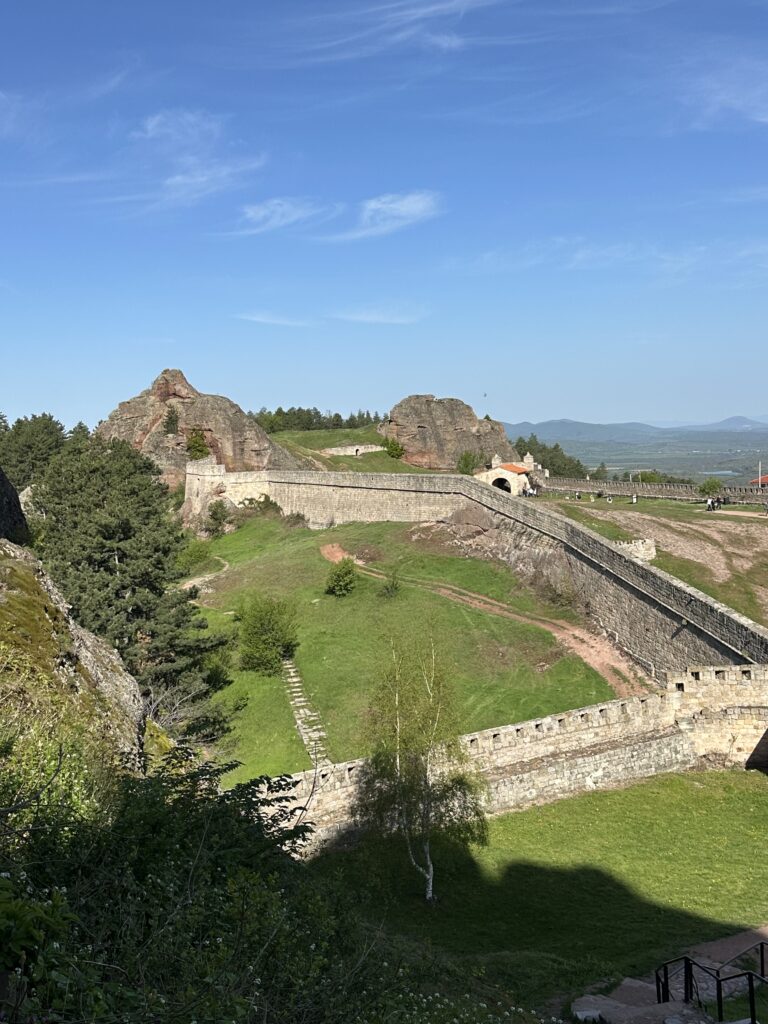
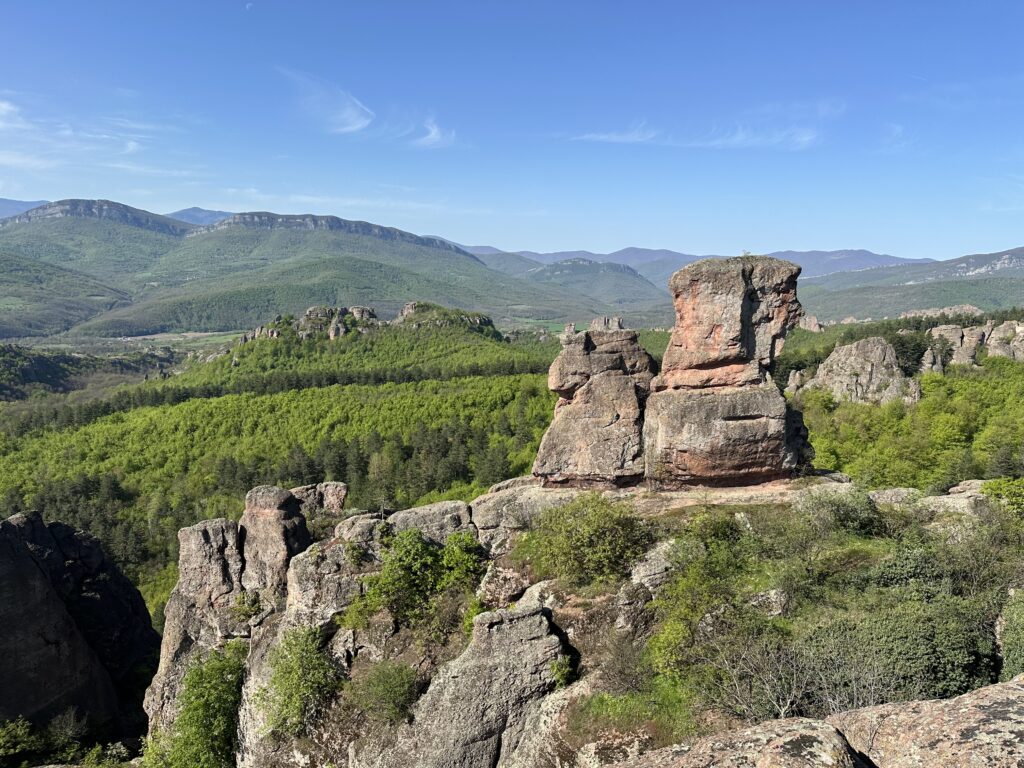
First stop of the day was Belogradchishki Skali or Belogradchick Rocks and Fortress. The development of the fortress dates to the Middle Ages and while the fortress is an integral part of the area, the Rocks are the fascinating part. The rocks date back many millions of years ago and erosion and water have yielded some fascinating formations with some equally fascinating legends about the formations.
One such legend includes a nun who fell in love with a nobleman. She was cast out of the monastery with her baby and in a miracle, she, her baby, the nobleman and the monks were all turned to stone.
The fortress part of the Rocks was inhabited by Romans, Bulgarians and the Ottoman Empire. It was used as a military installation up until 1885.
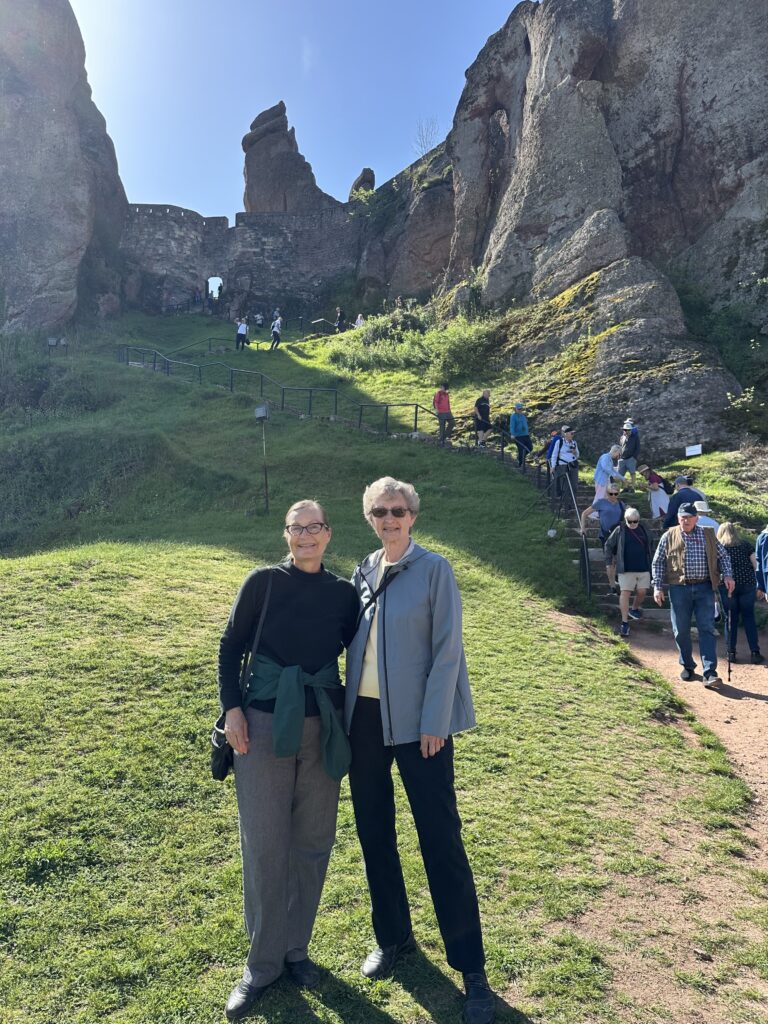
This stop is not for people that have mobility issues. The pathway is rocky and uneven and there are many stairs up to the top of the rocks for the view. Watch your step once you get up to the top, as there are not many protective rails and the terrain is very rough. Worth the trek to the top, though, the view is outstanding!
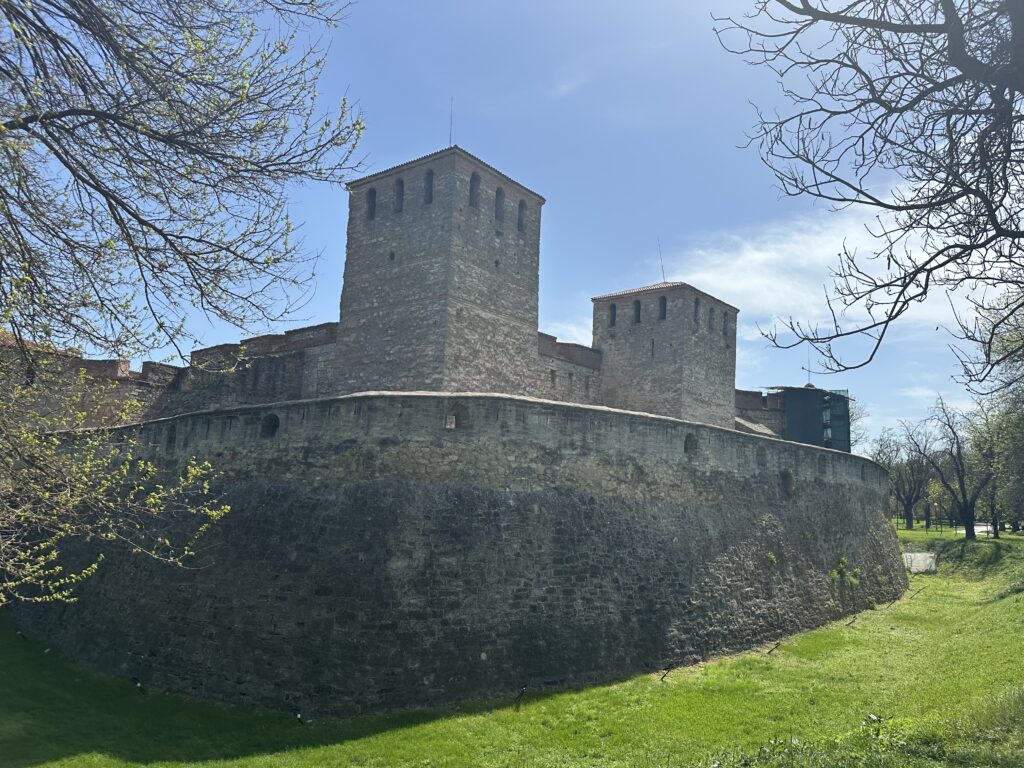
The second fortress of the day was in the city of Vidin, Baba Vida. It was much more developed for tourism than Belogradchick. Baba Vida is the only fortress castle in Bulgaria preserved in its original form and the preservationists did a good job. Originally developed beginning in the tenth century by Romans, it now houses a museum of medieval apparel and arms.
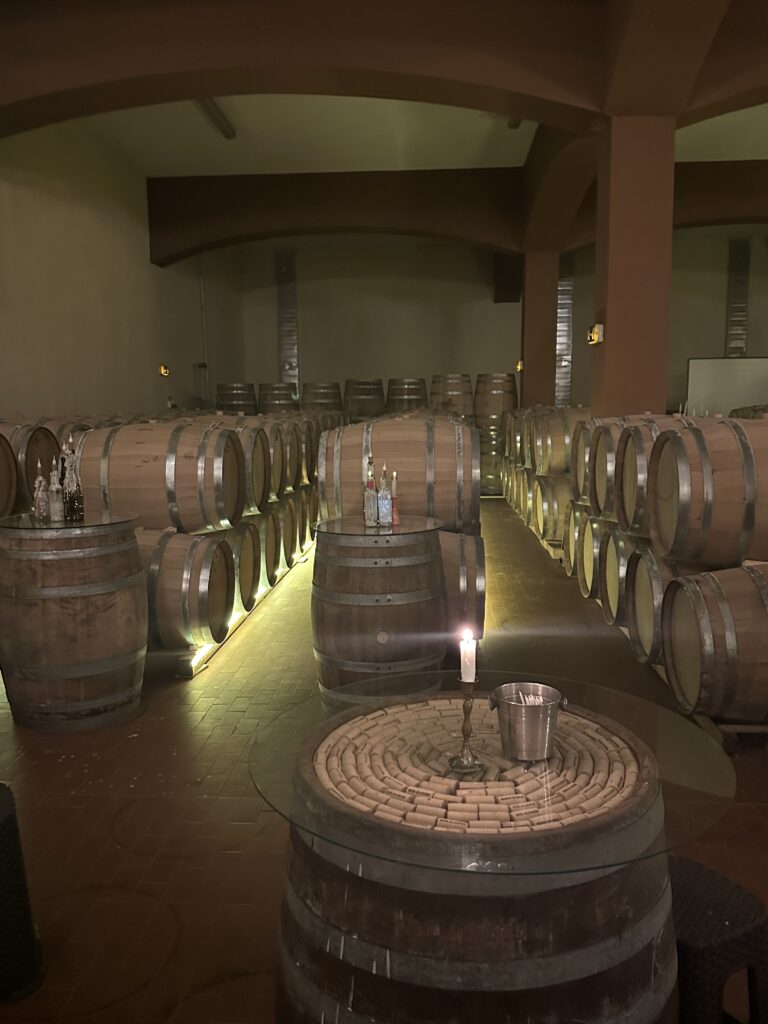
After a morning of historical sites, we were excited to be heading out for another countryside drive ending at a winery. Dos Alamos Winery was our stop. The tasting area was in the cellar where the barrels were stored, and we were able to taste one of the wines directly from the barrel. They had an assortment of whites and a few reds that were okay, but not striking to our palates. The candlelit wine barrel tables were a nice touch, and it was nice and cool in the cellar. We were also served a roll, olives and a couple of local cheeses which were very nice and went nicely with the wine.
Of interest also was a souvenir area featuring wines, honey, area crafts and several Attar of Rose soaps. This area is where Damascus Roses are grown, and Rose of Attar is harvested. Heavenly smells and great gifts for friends!
Where we stayed: Onboard a river vessel. The boat had an elevator, but some of the decks are split level with thresholds.
How we got there: Sailed from Golubac, Serbia. This was part of a seventeen-day river cruise tour through Eastern Europe including Austria, Hungary, Croatia, Serbia, Bulgaria, Romania and a post-extension in Turkey.
General Accessibility Information: Bulgaria’s larger cities are generally accessible with accessible major hotels and sights. Many of the historical sites will have steps or cobbled surfaces, so be prepared for partial or little accessibility. Call in advance to verify and make specialty arrangements. See our sections on specialty apps and accessible travel for more on accessibility assistance.