Edinburgh
Travel Advice for Seniors: Edinburgh
Edinburgh (pronounced Ed-n-burra), is one of those cities that has everything: Fascinating history, excellent art galleries/museums, good shopping and an element of mystery or the mystical.
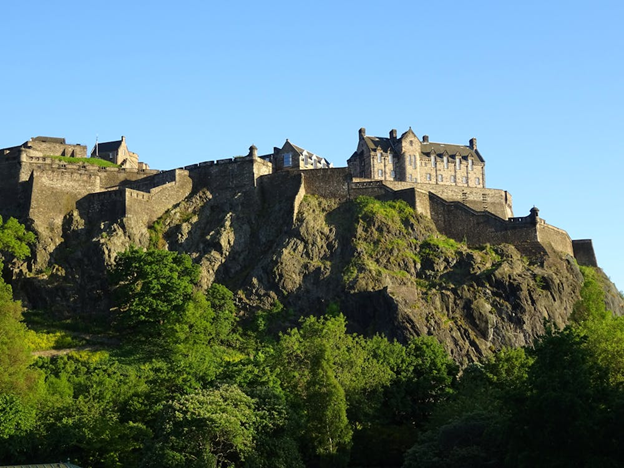
Edinburgh Castle has been occupied for over a thousand years and human habitation was established in about 8500 BC. It was named the capital of Scotland in 1437 and has seen a lot of history. Interestingly, parliament was developed only formally in 1999, though a type of parliament has existed since the early 1200’s.
Throughout history, the Scottish proved they can be a pretty rowdy and cutthroat bunch. Family feuds seem to languish for centuries and the struggle against the English crown went on for ages. However, as of 2014, Scotland has chosen to be part of the United Kingdom and the clan MacDonald v. clan Campbell feud has settled.
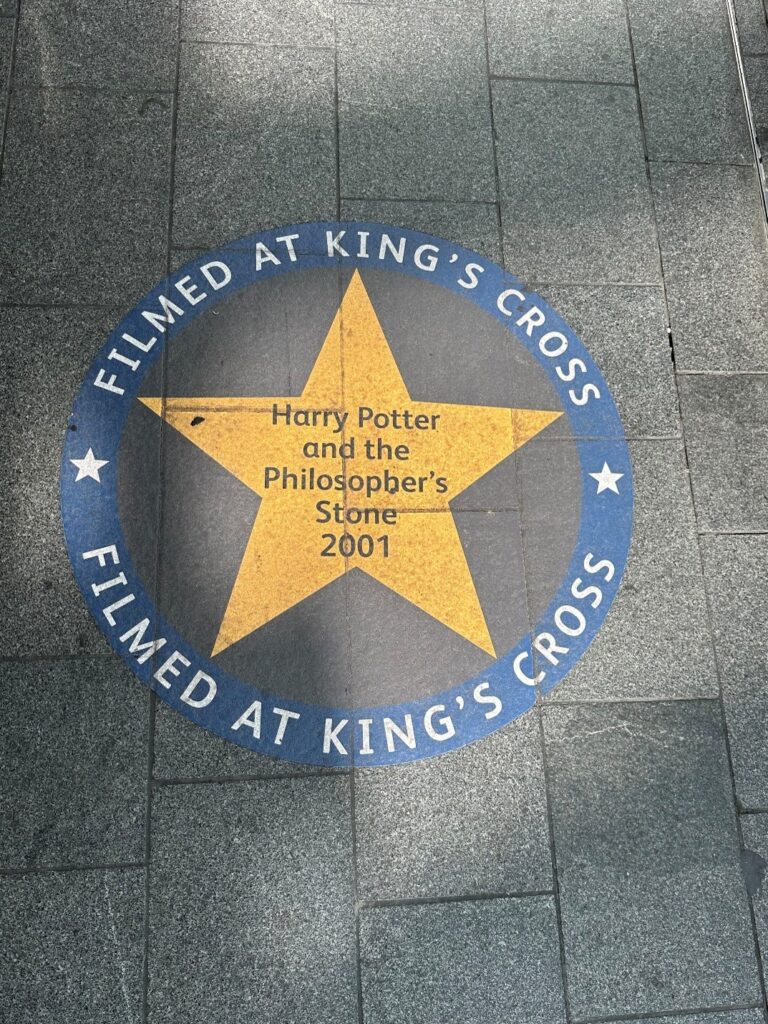
Our trip to Scotland started with an overland train from London Kings’ Cross to Edinburgh. For those Harry Potter aficionados, you may recognize Platform 9 ¾ at King’s Cross Station as the departure point for the train to Hogwarts, and yes, there is a business at that location selling photo ops as you attempt to walk through the wall! Apparently, this particular station has had many movies filmed on location and Broadway-style “Walk of Fame” stars are scattered around the station.
We love to take the train when we can. It gives us the opportunity to relax and get a feel for the local countryside as we move from point to point. Granted, the train stations are usually in the industrial part of town, so not a lot of scenic views there, but there were nice countryside views as well as a nice view of the North Sea as we headed to Edinburgh.
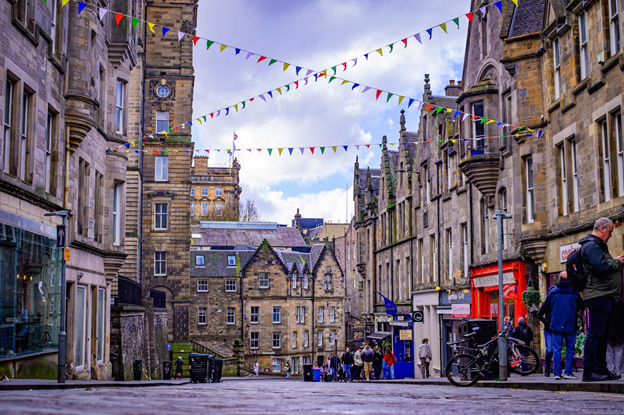
Central Edinburgh is divided into two parts: Old Town and New Town. The Old Town is where the medieval historical buildings are located including Edinburgh Castle, Palace of Holyroodhouse and the Royal Mile. It is indeed steeped in history and you can really feel it in the cobbled streets and dark shop fronts. Apparently, the buildings look so dark and foreboding due to the accumulation of smoke and grime of coal heating over the years on the sandstone. A gem of Gothic architecture, with very narrow “closes” or walkways between buildings, people lived both above and below ground in olden times and disease from lack of good sanitation was rampant. In fact, one of the “things to do” in Edinburgh is to go on a ghost tour of the . underground. We did this on our first visit to Edinburgh – it was creepy, but we didn’t witness any apparitions.
In 1749, the inner city was getting too crowded and sewage and sanitation was horrible, thus started the construction of New Town, which features lovely 18th century Georgian architecture, planned parks, organized city central planning and inviting shops. It is much more welcoming than the Old Town, which was the of course, the intention. Both the Old Town and New Town are UNESCO Heritage sites.
In addition to it’s share of UNESCO Heritage sites, Edinburgh is also a UNESCO City of Literature. You may remember Sir Walter Scott, Robert Lewis Stevenson and Sir Author Conan Doyle of Sherlock Holmes fame. Further, the Balmoral hotel on the Royal Mile is said to be where author JK Rowling completed the Harry Potter novel, “The Deathly Hallows” and Victor Street is said to have provided inspiration for “Diagon Alley”.
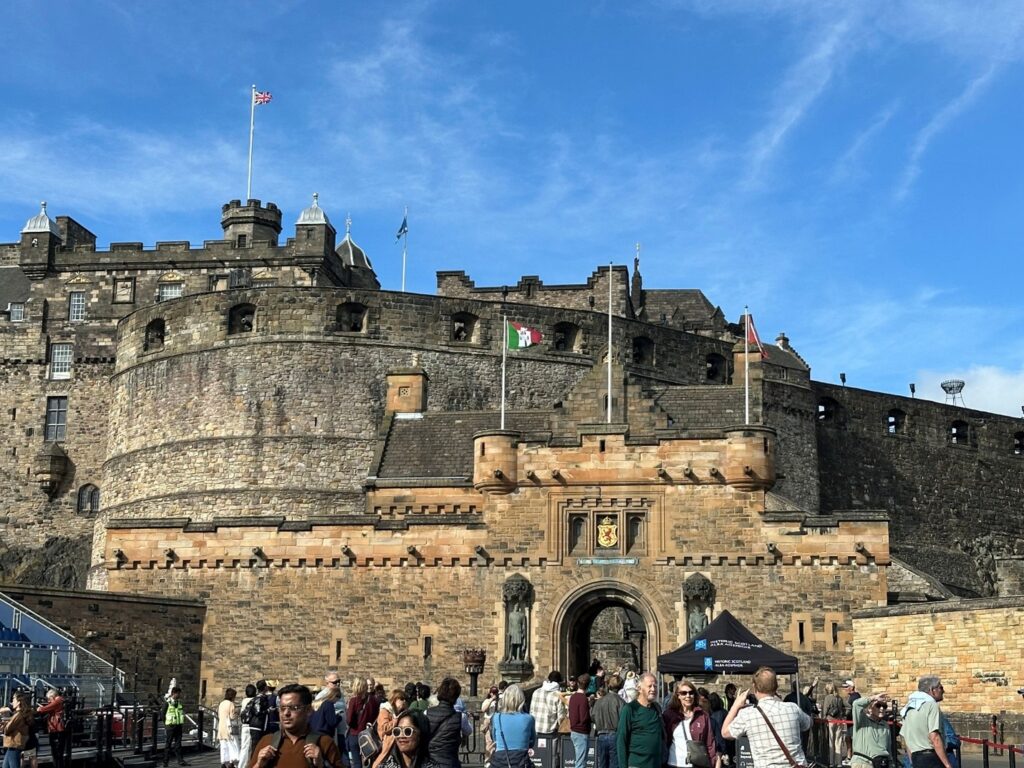
The best starting point, of course, is Edinburgh Castle on one end of the Royal Mile, followed by a stroll to Holyroodhouse at the opposite end. Edinburgh Castle sits high on Castle Rock and it is a bit of an uphill walk on cobbled surface to get there. Built around 1100, the Castle is home to the Scottish Crown Jewels and former home of the Stone of Scone (which has been removed to Perth). The Stone of Scone has been used for Scotland’s Royal coronations since the 1200’s. Also within the complex, is St Margaret’s Chapel, the oldest building in Edinburgh. The Castle boasts 26 sieges over the centuries and is a symbol of Scottish resilience. The Castle is only partially accessible due to the many cobbled surfaces, a ride is available upon request to the top of the grounds.
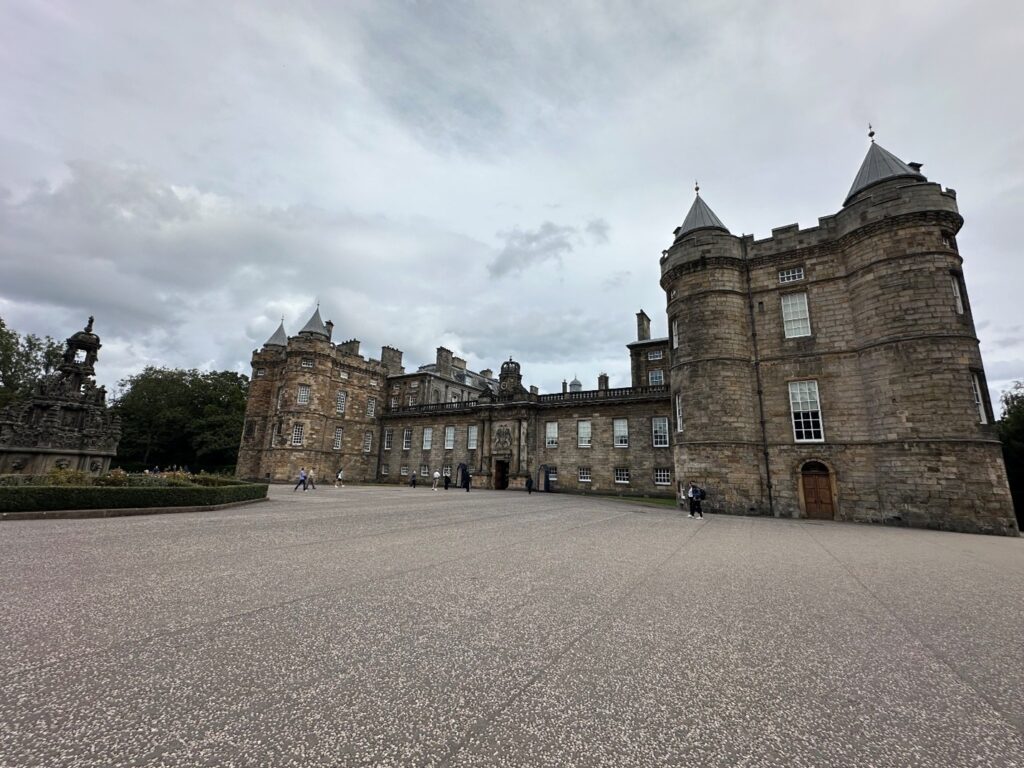
At the other end of the Royal Mile, is the Palace of Holyroodhouse, home to Scottish royal ceremonies for over 500 years and famously known as the home of Mary, Queen of Scotts. Don’t miss the State Rooms, the Throne Room, the Portrait Gallery and the lovely gardens. Historically the Royal Mile was where the royals resided, with the common gate located outside of the historical part of town. The Palace is mostly accessible, with wheelchairs available for use and an accessible restroom.
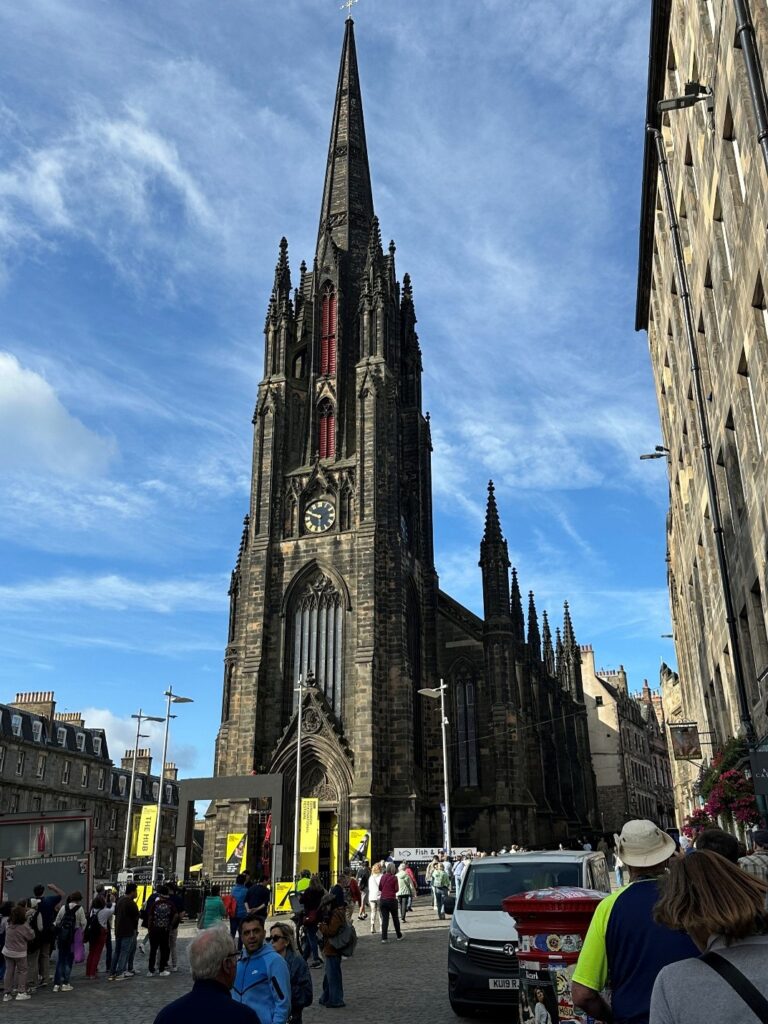
While on the Royal Mile, make a stop by St Giles Church, where Queen Elizabeth II lied in state and where King Charles received the Scottish jewels. The church was founded by John Knox, who led the Scottish Reformation in the 1500s against Catholicism, frequently clashing with Mary, Queen of Scots.
Be sure to allow enough time for the National Gallery of Edinburgh and it’s fantastic collection of artwork. Not to missed: Rembrandt’s Virgin of the Rocks, Van Gogh’s Sunflowers, Jan Van Eyck Arnolfini Portrait and JMW Turner’s exceptional The Fighting Temeraire to name a few. Fully accessible, with wheelchairs available to use.
Also, do take a walk over to the New Town for a glimpse of Sir Walter Scott’s statue, Charlotte Square (the Prime Minister lives in #6), the beautiful Princes Street Gardens and the Scottish National Portrait Gallery if time allows.
Also, be sure to leave enough time to grab a pint at one of the many, many pubs!
Where we stayed: Holiday Inn Express Edinburgh City Centre, breakfast included. Accessible entrances, parking, and rooms.
How we got there: Five-hour train ride from London. Fifteen-day small group tour through Scotland and Ireland.
General Accessibility Information: Edinburgh New Town is mostly accessible, however, some of the older buildings may not be due to steep steps and uneven surfaces, particularly in the Old Town. Call in advance to verify and make specialty arrangements. See our sections on specialty apps and accessible travel for more on accessibility assistance. Many newer hotels and transportation are accessible.